
This luxury SUV can take on terrain that would challenge plenty of crossovers.
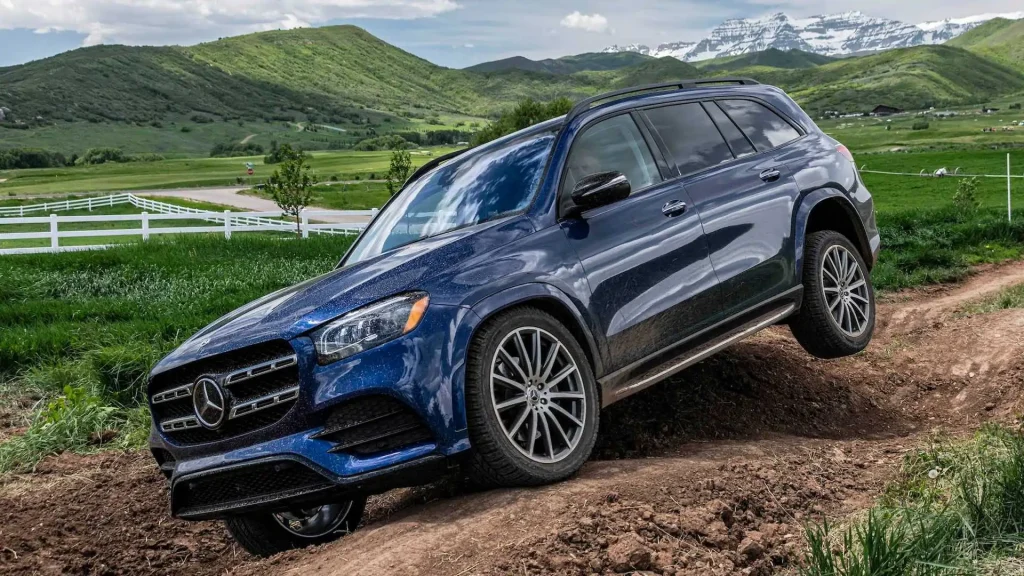
Unibody crossovers aren’t usually the first choice for serious off-roading. Compared with traditional body-on-frame SUVs, they typically lack the rugged hardware needed to tackle difficult trails. The 2020 Mercedes-Benz GLS, however, challenges that assumption. Mercedes-Benz engineered its flagship three-row crossover to deliver the refinement and road manners expected from a luxury vehicle while giving it enough technology and hardware to handle surprisingly demanding terrain.
To see just how capable the GLS could be, we left Florida and headed to Utah, where the landscape provides considerably more challenging terrain. The route between Salt Lake City and Provo eventually gives way to a public off-road course filled with steep rocky climbs, muddy sections, water crossings, twisting descents, and an articulation section designed to expose the weaknesses of less capable SUVs. Over the course of roughly 90 minutes, the GLS was pushed well beyond what most people would expect from such a large luxury crossover.
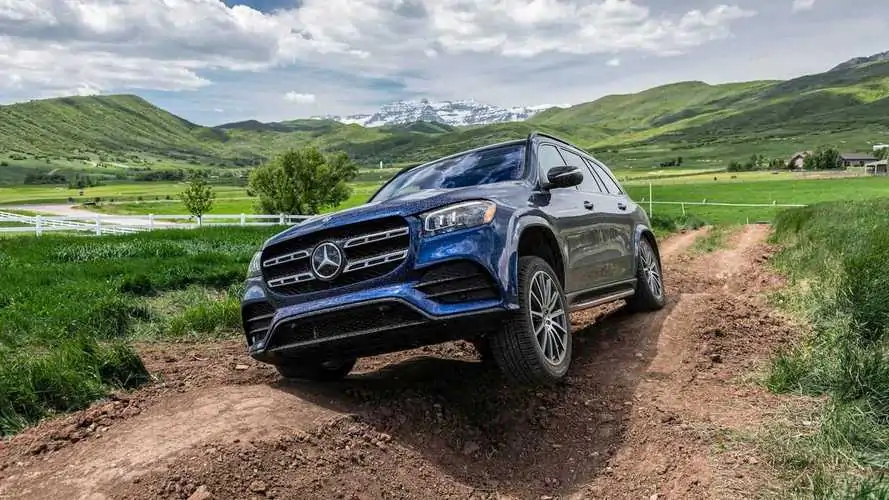
The vehicle in question was the GLS 580, powered by a twin-turbocharged 4.0-liter V8 producing 483 horsepower and 516 pound-feet of torque, with Mercedes’ EQ Boost mild-hybrid system providing additional electric assistance. Power is sent through a nine-speed automatic transmission and the company’s variable 4MATIC all-wheel-drive system, which is standard on the GLS 580. Rather than using a dual-clutch gearbox, Mercedes opted for a conventional automatic with a torque converter and planetary gears, a setup that provides useful advantages when crawling over difficult terrain and when towing. The GLS can tow up to 7,700 pounds when properly equipped, adding another layer of versatility to the large luxury SUV.
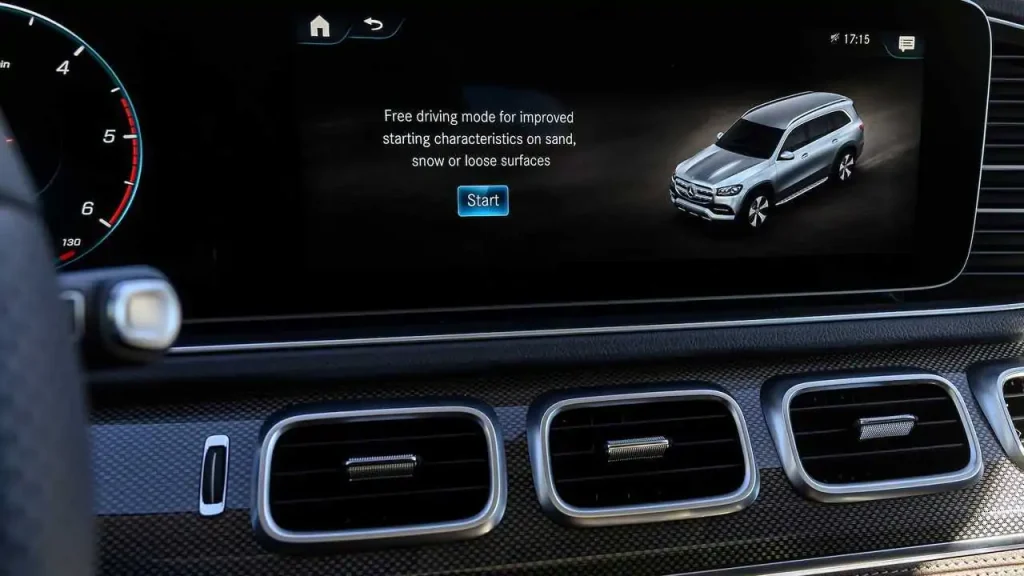
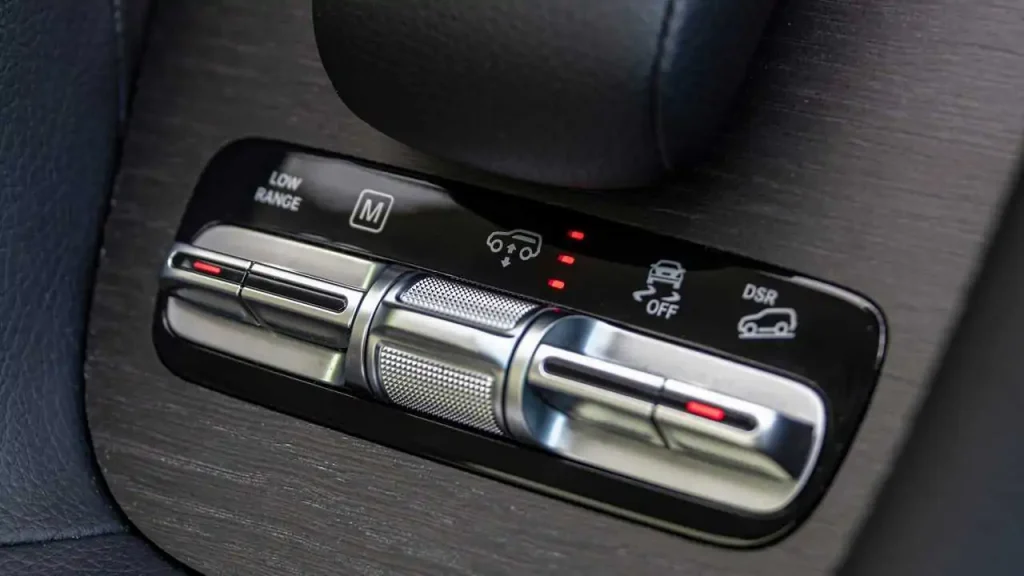

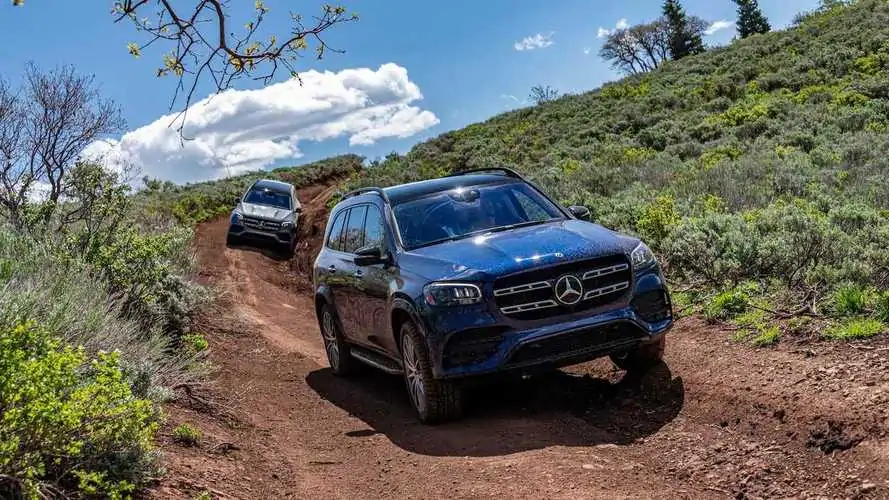
The trail begins relatively gently, with a gradual gravel climb that allows the GLS to demonstrate its basic off-road settings. Selecting the Off-Road driving mode changes the vehicle’s behavior to better suit loose and uneven surfaces. With the accelerator only partially depressed, the V8 delivers its torque smoothly, while the electric assistance helps provide immediate response. The 4MATIC system distributes power to maintain traction, and the nine-speed automatic keeps the engine in an appropriate gear without requiring constant driver intervention.
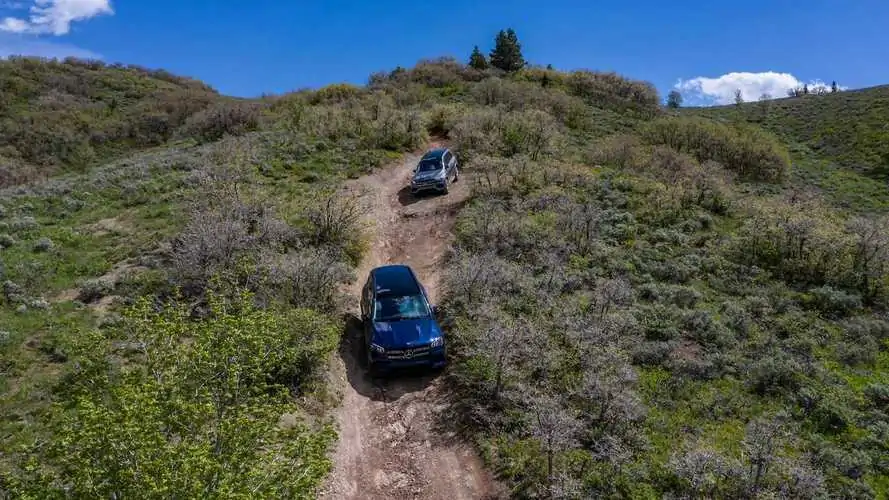
The first steep sections reveal just how effective the combination can be. Some portions of the trail climb at approximately 15 degrees, with uneven surfaces and loose gravel making traction more difficult. The GLS climbs without much drama. Its adjustable air suspension can be raised to increase ground clearance, helping protect the underside when the trail becomes rocky or the approach angles become more challenging. The only real complaint is the light steering, which offers relatively little feedback about what the front tires are doing on loose surfaces.
As the trail becomes more demanding, the GLS moves into Off-Road+ mode. This setting brings additional hardware and software into play, including a two-speed transfer case with a reduction gear and an on-demand torque function designed specifically for difficult terrain. The lower gearing gives the GLS more control at low speeds while helping the SUV maintain steady progress over rocks and steep obstacles.
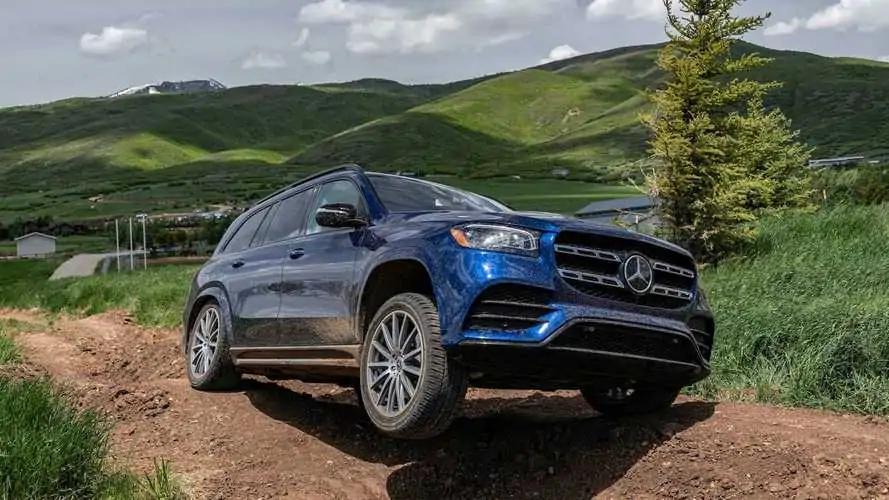
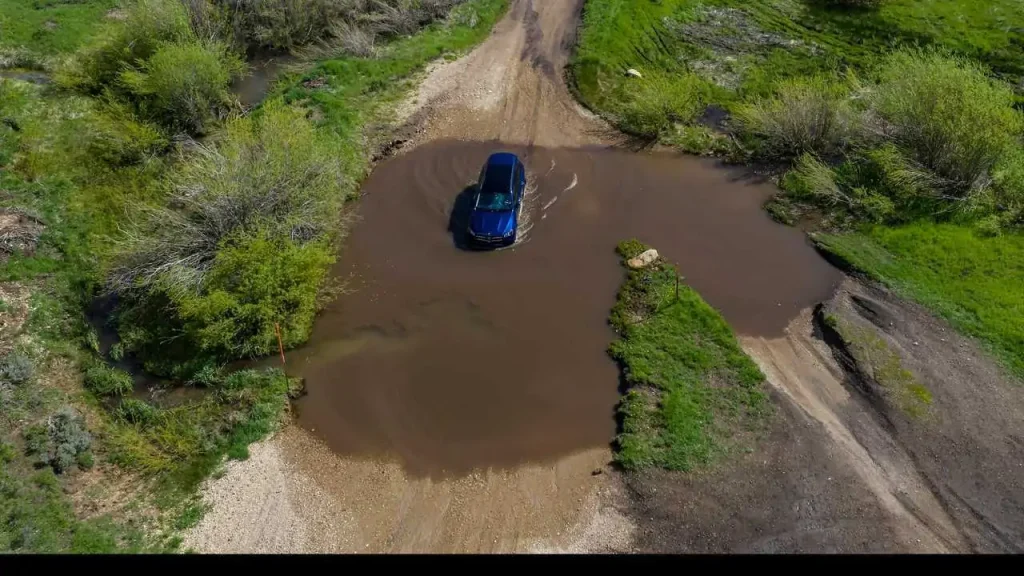
Water crossings provide another opportunity to test the GLS. With the suspension raised to its highest setting, maximum ground clearance increases to 8.5 inches, while the SUV can handle water up to a claimed 23 inches deep. That doesn’t turn the GLS into a dedicated expedition vehicle, but it gives the crossover enough capability to handle the kind of deep puddles and muddy sections that would stop many luxury SUVs.
The air suspension is particularly impressive when the terrain becomes uneven. Instead of simply absorbing bumps, the GLS uses its sophisticated chassis electronics to manage the movement of the body and maintain traction. On rocky inclines and articulation sections, the vehicle’s torque-management systems can shift power where it is needed to keep the SUV moving.
The GLS can send as much as 100 percent of available torque to either the front or rear axle, helping it maintain forward progress when traction becomes uneven. That capability becomes especially useful when individual wheels begin to lose grip. Rather than allowing the vehicle to simply spin a tire and stop, the electronic systems work to transfer usable torque to wheels with traction.
Visibility is another advantage when the trail becomes technical. The GLS offers a forward-facing trail camera that can be used at speeds of up to 10 mph. When the hood blocks the driver’s view of an obstacle or the trail drops sharply out of sight, the camera provides a better look at the terrain directly ahead. That can be extremely useful when approaching rocks, steep breakovers, or blind declines in a vehicle as large as the GLS.
There is even a feature designed specifically for situations in which the vehicle becomes stuck in sand. Mercedes’ Rocking Mode uses the suspension to bounce the vehicle in an attempt to help free it from loose terrain. The Utah course didn’t contain the deep sand necessary to properly test the system, so it wasn’t part of the main trail evaluation. Still, activating the feature in a parking lot demonstrated just how unusual some of the GLS’s chassis technology can be.
Much of the GLS’s off-road ability comes from its E-Active Body Control system. Mercedes previously introduced the technology on the GLE, but its application in the much larger GLS gives the luxury crossover an impressive range of capabilities. Working with the adaptive air suspension and the SUV’s 48-volt electrical architecture, the system allows the GLS to maintain its composure on uneven ground while providing additional clearance when necessary.
The technology is particularly remarkable because the GLS doesn’t abandon its luxury-car personality when it leaves the pavement. On the highway, the SUV remains quiet, smooth, and comfortable, with the spacious three-row cabin providing the kind of refinement expected from a flagship Mercedes-Benz. The same suspension technology that helps the GLS crawl over rocks also makes long highway journeys remarkably comfortable.
That’s ultimately what separates the GLS from many dedicated off-road SUVs. It isn’t trying to replace a Jeep Wrangler or Mercedes-Benz G-Class. Instead, it provides a compromise that allows owners to enjoy luxury and comfort during the week while still having the ability to venture onto challenging trails on the weekend.
There are limitations, of course. The GLS is a massive vehicle, and its size can make narrow trails and tight turns difficult. Its road-focused tires aren’t designed for extreme off-road use, and its weight is something drivers need to consider when navigating soft ground or steep obstacles. It also lacks some of the traditional hardware associated with serious off-roaders.
The Mercedes-Benz G-Class, for example, retains body-on-frame construction, locking differentials, and a dedicated low-range system that make it a much more specialized machine for extreme terrain. The GLS takes a different route, relying heavily on electronics, adaptive suspension technology, torque management, and its sophisticated 4MATIC system to accomplish many of the same tasks.
Mercedes even gives drivers a way to measure their off-road performance through an “off-road score” integrated into the MBUX infotainment system. The system evaluates factors such as approach angles, throttle control, steering, and braking, effectively turning a trail drive into something of a driving game. It may not make the GLS more capable mechanically, but it adds an entertaining element to the experience and encourages drivers to improve their technique.


The GLS also demonstrates why Mercedes chose a conventional nine-speed automatic rather than a dual-clutch transmission. The torque converter and planetary gear arrangement provides smoother control at low speeds, which is particularly valuable when crawling over rocks or descending steep sections. The same hardware also contributes to the GLS’s towing capability, giving the SUV a maximum towing rating of 7,700 pounds when properly equipped.
After spending time on the Utah trail, it’s difficult to dismiss the GLS as simply another luxury crossover. The vehicle’s size and unibody construction may initially suggest that it belongs strictly on pavement, but the combination of 4MATIC all-wheel drive, adjustable air suspension, E-Active Body Control, Off-Road and Off-Road+ modes, low-range gearing, torque management, and trail-camera technology gives it genuine off-road credentials.
The bottom line is that the 2020 Mercedes-Benz GLS isn’t a hardcore off-road vehicle, nor does it pretend to be one. Its mission is broader. It provides three-row luxury, impressive road manners, substantial towing ability, and enough trail capability to tackle terrain that would leave many conventional crossovers struggling. The fact that it can climb steep rocky trails, navigate muddy sections, cross deep water, and negotiate uneven terrain without sacrificing its polished road-going character is what makes it so impressive.
For buyers who want a large luxury SUV that can handle more than a gravel driveway but don’t want to give up comfort for ruggedness, the GLS makes a surprisingly strong case. It may not have all the old-school hardware of the G-Class, but Mercedes-Benz has used modern technology to prove that a sophisticated unibody luxury crossover can be far more capable off-road than its polished appearance suggests.