
From the quirky BRAT to the unconventional Baja, Subaru never followed the crowd. Instead, its willingness to build unique, sometimes downright odd vehicles helped transform the Japanese automaker into one of America’s most beloved brands.
Subaru has enjoyed years of remarkable success in the United States, with a long streak of record-breaking sales cementing its place as a mainstream automotive brand. Ironically, that success has also coincided with the gradual disappearance of the quirky personality that once defined the company. Today’s Outback and Forester are excellent crossovers, but they’re designed to appeal to the masses rather than stand out from them.
That wasn’t always the case. When Subaru first established itself in the U.S., it built a reputation on unconventional thinking, introducing vehicles that blurred categories, embraced unusual styling, and catered to buyers looking for something different. Some were commercial hits, others were short-lived experiments, but all helped shape the brand’s distinctive identity. Here are five of the weirdest—and most memorable—Subarus ever sold in America.
Table of Contents
Subaru 360: The Tiny, Oddball Car That Put Subaru on the Map
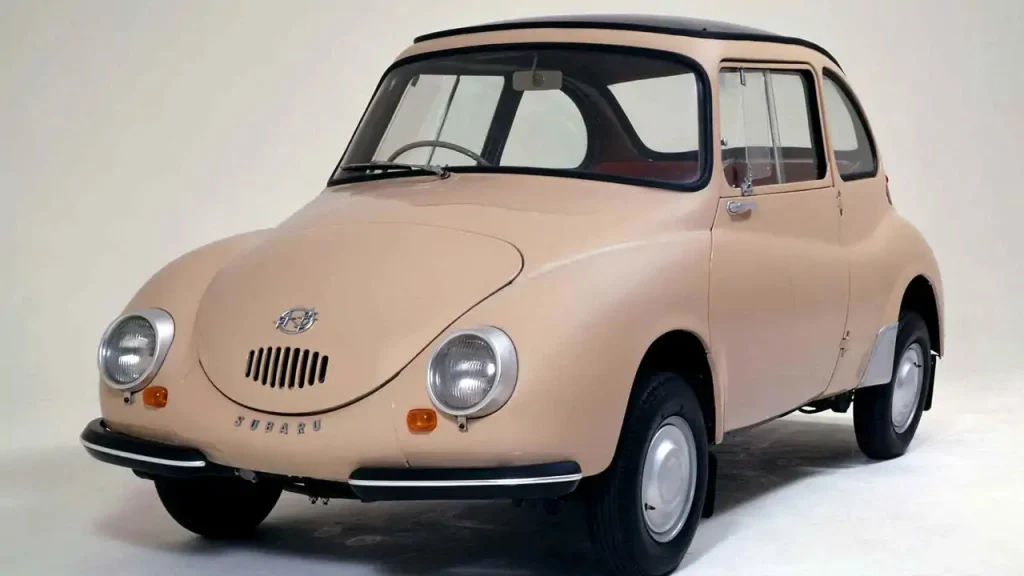
The first Subaru sold in America was anything but conventional. In 1968, Malcolm Bricklin and his business partner introduced the diminutive Subaru 360 to U.S. buyers. At just $1,297—equivalent to about $9,000 today—it promised inexpensive transportation, but its microcar proportions stood in stark contrast to the V8-powered land yachts filling American highways.
The Subaru 360 was designed to fit Japan’s kei car regulations, a class of ultra-compact vehicles that benefited from tax breaks and lower ownership costs thanks to their small size and low-displacement engines. Measuring just 118 inches (2,997 mm) long, the 360 was about 42 inches (1,067 mm) shorter than a contemporary Volkswagen Beetle, making it one of the smallest cars ever offered to American buyers.
Its rear-mounted, air-cooled 356-cc two-cylinder engine delivered modest performance at best. In a 1969 test, Consumer Reports found the 360 needed 37.5 seconds to accelerate from 0 to 50 mph (80 km/h), while the Volkswagen Beetle reached the same speed in just 14.5 seconds. During the height of the muscle car era, when V8-powered coupes and sedans ruled American roads, the pint-sized Subaru must have looked like it came from another planet.
Despite its lackluster performance, the 360 made up for it with undeniable charm. Its bug-eyed headlights, rounded bodywork, and cheerful proportions gave it a personality unlike anything else on the road. That lovable, roly-poly appearance even earned it the nickname “Ladybug” in Japan—a fitting title for one of Subaru’s most memorable and unconventional creations.
Subaru BRAT: The Weird Little Pickup Americans Loved
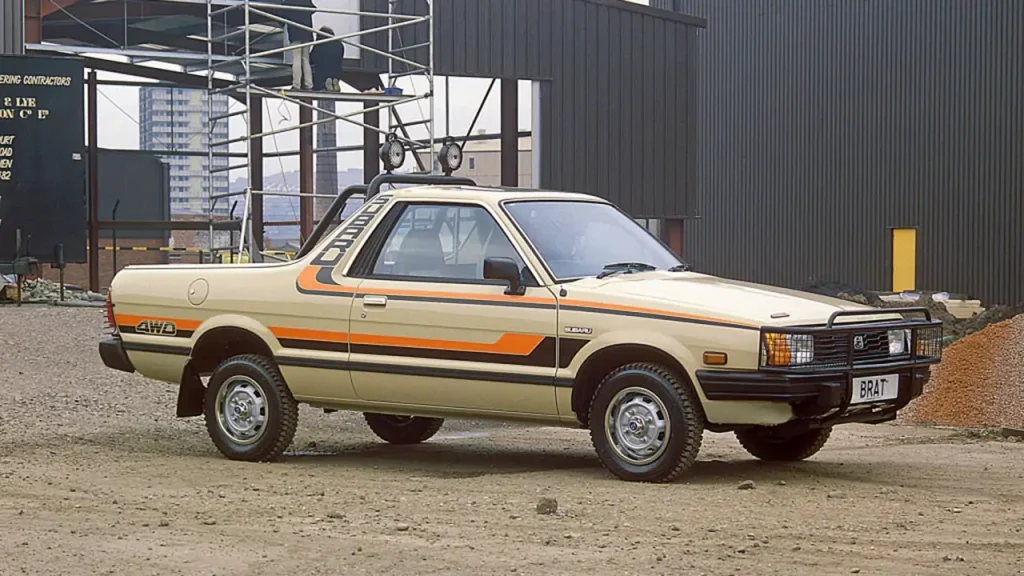
The Subaru BRAT owes much of its quirky design to one simple goal: avoiding import tariffs. By installing a pair of rear-facing jump seats in the cargo bed, Subaru was able to classify the BRAT as a passenger vehicle rather than a pickup. That clever workaround exempted it from the 25-percent “Chicken Tax” levied on imported trucks, allowing Subaru to price the BRAT competitively against compact pickups from Japanese rivals like Toyota and Datsun (now Nissan).
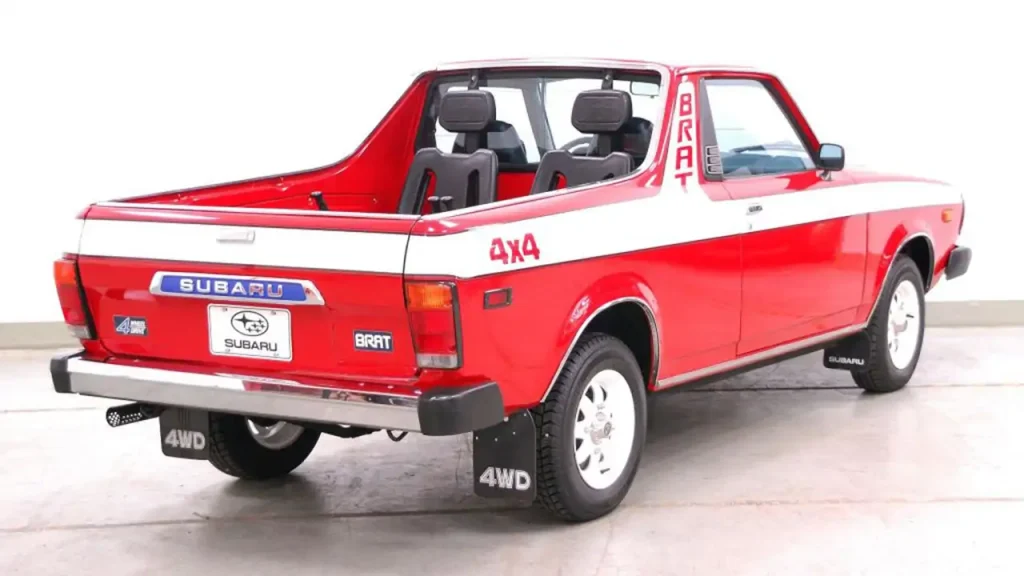
The bed-mounted seats may have been the BRAT’s most famous oddity, but they were far from its only one. Unlike most pickups of the era, the BRAT could be equipped with removable T-top roof panels, giving drivers an open-air experience more commonly associated with sports cars. It also offered an unusual center-mounted headlight hidden behind the Subaru badge, which could be activated to flash slower traffic—a feature rarely seen on production vehicles.
The result was a pickup unlike anything else on the market. Equal parts coupe, truck, and off-road runabout, the BRAT perfectly captured Subaru’s willingness to ignore convention in favor of clever engineering and distinctive design.
Subaru XT: The Wedge-Shaped Sports Car From the Future
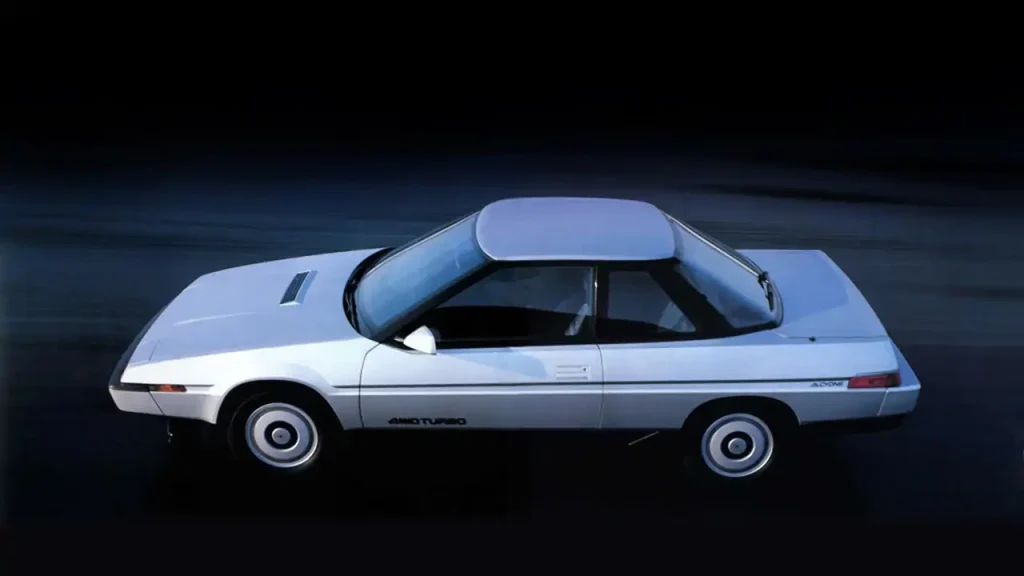
Years before the WRX and STI made Subaru synonymous with rally-inspired performance, the XT represented the brand’s first real attempt at building a sporty halo car for the American market. Debuting in 1985, the sleek coupe stood out with an aggressively wedge-shaped body that looked decades ahead of its time. Its low nose, crisp angles, and ultra-aerodynamic profile gave it the appearance of a rolling concept car, while the full-width taillights added to its unmistakably futuristic character.
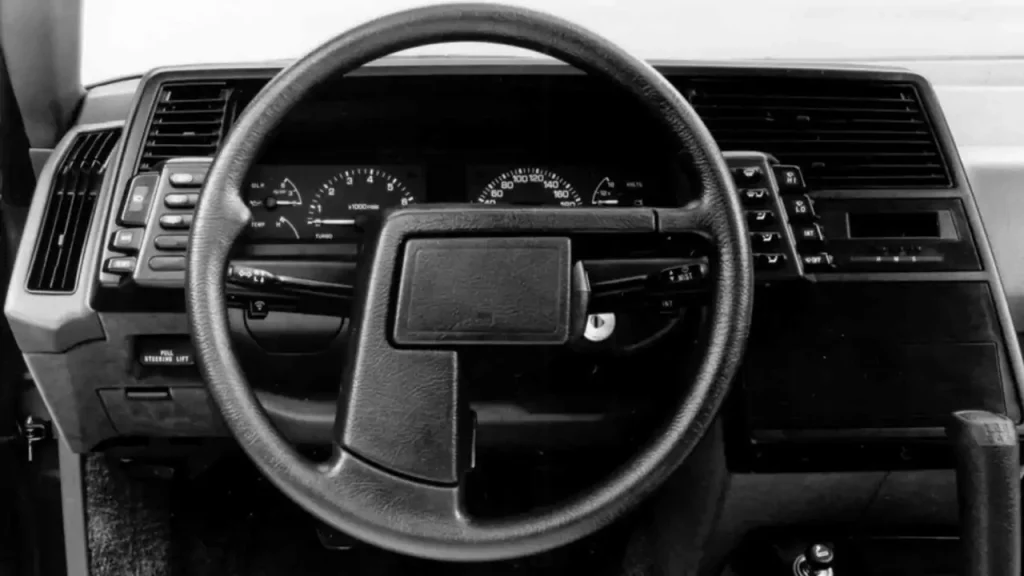
The XT’s interior was just as unconventional. Instead of a traditional dashboard layout, Subaru designed a driver-focused cockpit featuring a uniquely shaped steering wheel with L-shaped spokes and rotating control pods mounted on either side of the steering column. These housed the switches for the lights, wipers, and climate controls, creating an aircraft-inspired driving environment. On higher trims, a digital instrument cluster completed the high-tech look, making the cabin feel like something straight out of an ’80s science fiction film.
Despite its bold styling, the XT never delivered the performance its appearance promised. Early models were powered by a turbocharged 1.8-liter boxer engine producing just 110 horsepower (82 kW), resulting in modest acceleration. Subaru later addressed that shortcoming with the XT6, which swapped in a naturally aspirated 2.7-liter flat-six generating 145 horsepower (108 kW). The additional power made the coupe more enjoyable to drive, but it remained a stylish cruiser rather than a true high-performance sports car.
Subaru SVX: The Weirdly Styled Grand Tourer That Went Its Own Way
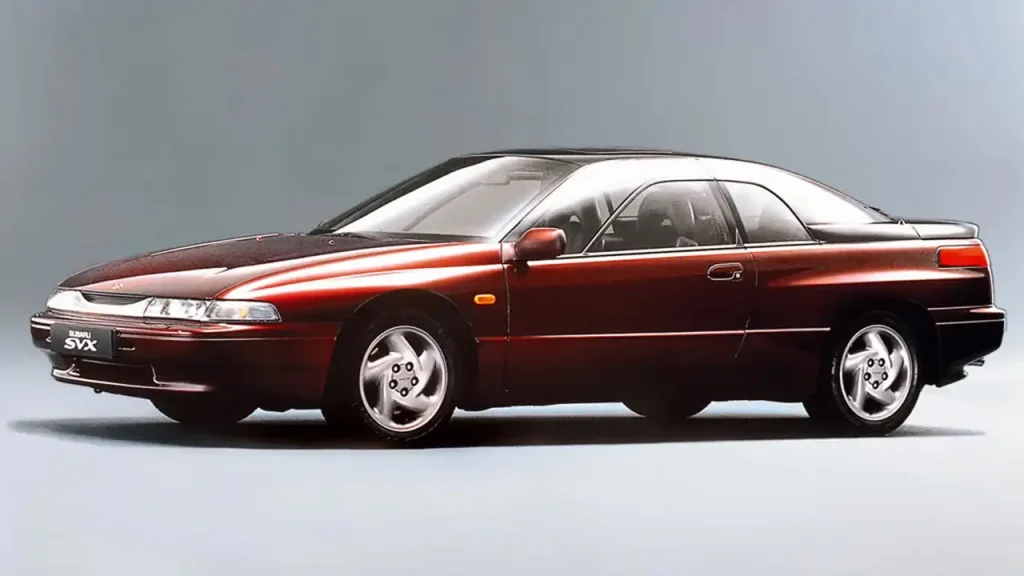
The Subaru SVX was unlike anything the company had ever built. Introduced for the 1992 model year, the sleek grand touring coupe was designed to elevate Subaru beyond its reputation for practical all-wheel-drive cars. Styled by famed Italian designer Giorgetto Giugiaro, the SVX featured smooth, flowing lines and one of the most distinctive greenhouse designs of the era. Its signature “window-within-a-window” side glass remains one of the most recognizable styling cues ever fitted to a Subaru.
Beneath the futuristic bodywork was the most powerful engine Subaru had offered to that point. The SVX came exclusively with a 3.3-liter EG33 flat-six producing 230 horsepower (172 kW), paired to a four-speed automatic transmission. Most models featured Subaru’s full-time all-wheel-drive system, giving the coupe impressive stability and all-weather capability—qualities rarely found in luxury grand tourers of the early 1990s.
The SVX was packed with premium features, including leather upholstery, power-adjustable seats, automatic climate control, and a sophisticated suspension designed for comfortable high-speed cruising. Rather than competing with traditional sports cars, the SVX was built as a refined grand tourer capable of covering long distances in comfort while still delivering confident handling.
Despite its advanced engineering and striking design, the SVX struggled in the marketplace. Its relatively high price put it up against established luxury coupes from larger brands, while its automatic-only transmission limited its appeal among driving enthusiasts. Sales never met Subaru’s expectations, and production ended in 1997 after fewer than 25,000 examples were built. Today, the SVX is regarded as one of Subaru’s most ambitious and fascinating creations—a bold experiment that showcased just how far the company was willing to push beyond its conventional image.
Subaru Baja: The Pickup That Refused to Fit In
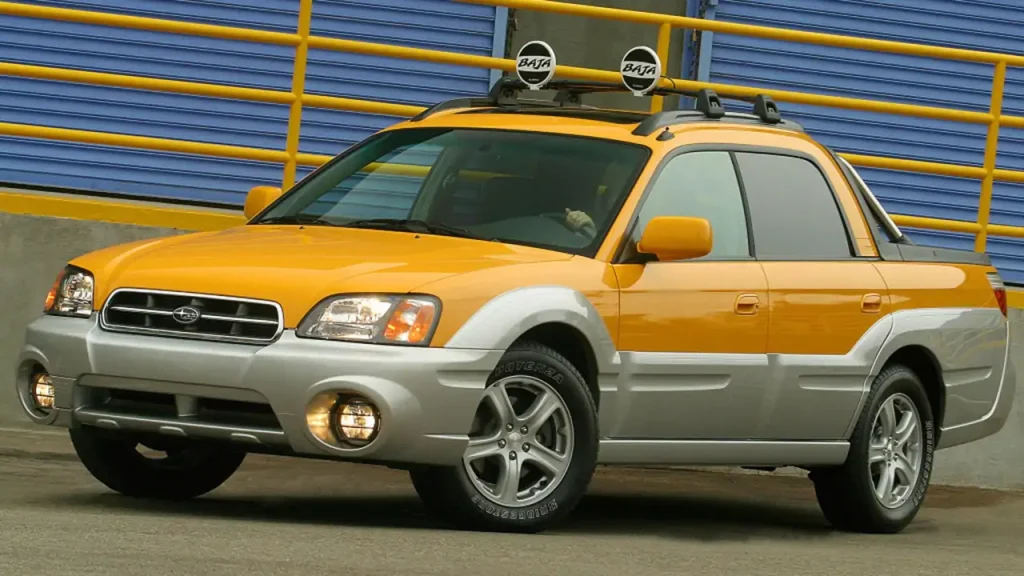
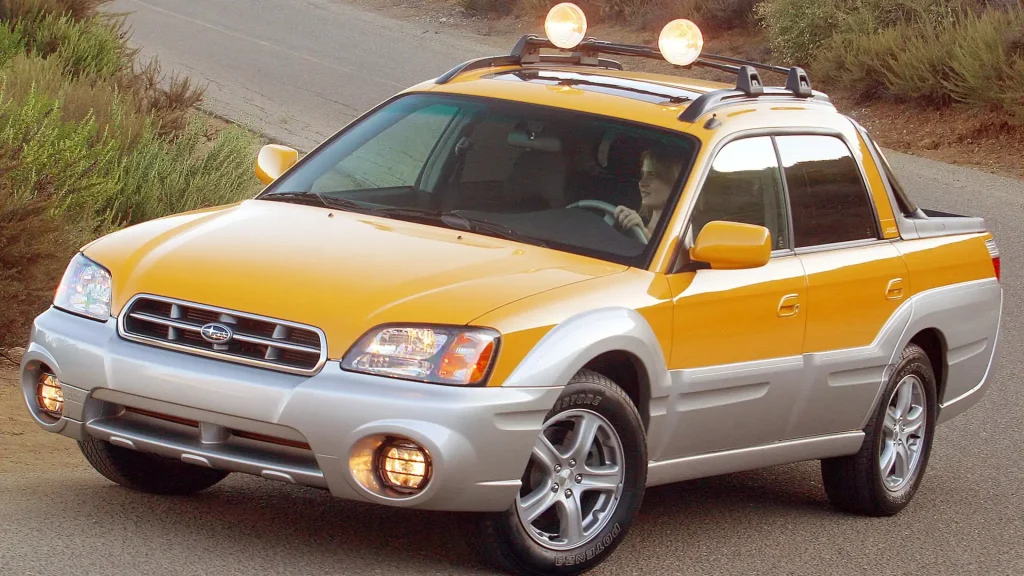
About 15 years after the BRAT disappeared from U.S. showrooms, Subaru made another unconventional attempt at the pickup market with the Baja, introduced for the 2003 model year. Rather than developing a traditional body-on-frame truck, Subaru transformed its popular Outback wagon into a compact pickup by replacing the enclosed rear cargo area with a short, open bed. The result was a unique car-truck hybrid that combined the comfort and handling of a crossover with the utility of a light-duty pickup.
The Baja’s styling has always been a matter of personal taste. Models finished in a single exterior color tend to highlight the vehicle’s clean lines, while early two-tone versions with contrasting lower body cladding gave it a busier, more polarizing appearance. Add in the distinctive sail panels connecting the cab to the bed and the integrated roof rack, and the Baja looked unlike anything else on the road.
Beneath its unconventional styling, however, was a genuinely clever design. The Baja featured Subaru’s innovative Switchback system, which allowed the panel between the passenger compartment and cargo bed to fold down, extending the load floor for carrying longer items such as bicycles, lumber, or camping gear. Buyers seeking more excitement could opt for a turbocharged 2.5-liter boxer engine that gave the compact pickup surprisingly brisk performance, especially when paired with Subaru’s standard symmetrical all-wheel-drive system.
Despite its versatility and unique blend of wagon comfort and pickup utility, the Baja struggled to find a mainstream audience. Many truck buyers wanted greater towing and hauling capability, while traditional wagon shoppers weren’t convinced by its open cargo bed. Production ended after just four model years, but the Baja has since earned cult status as one of Subaru’s most innovative and forward-thinking vehicles.