
From the legendary 356 to the modern 911 Speedster, Porsche’s open-air icons have always mixed lightweight performance with unmistakable style.
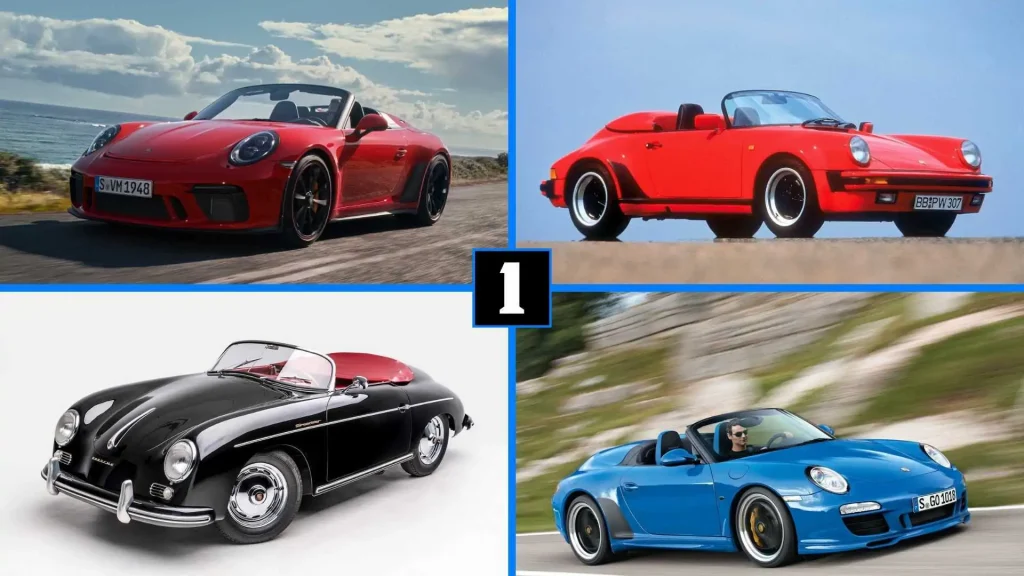
Few Porsche models have the same combination of history, exclusivity, and motorsport-inspired character as the Speedster. The formula has remained remarkably consistent for decades: remove the roof, lower the windshield, simplify the car where possible, and create something designed to make driving feel more connected. Yet each generation has interpreted that idea differently, reflecting the technology and design language of its era.
The story began in the 1950s with the Porsche 356 Speedster, a stripped-down roadster that quickly became an icon. Since then, the Speedster name has returned only occasionally, appearing on some of Porsche’s most memorable sports cars and limited-production models. Each one has brought its own interpretation of the formula while retaining the essential focus on open-air driving.
The latest chapter arrived with the 911 Speedster, bringing the concept into the modern era with contemporary performance and engineering. Its arrival also provided the perfect excuse to revisit the cars that established the Speedster name in the first place.
From the earliest 356 to today’s 911-based machines, here’s how Porsche’s Speedster design has evolved over more than six decades—and why these unusual convertibles continue to command so much attention.
Table of Contents
Porsche 356 America Roadster – 1952
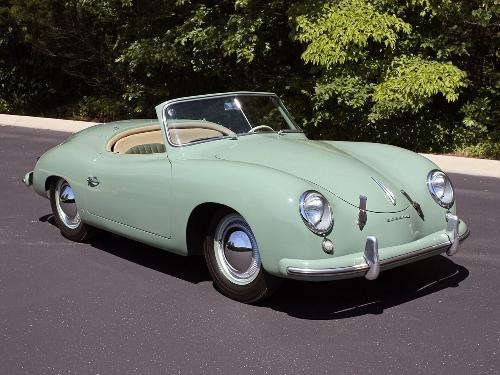
Before there was a 356 Speedster, there was the 356 America Roadster. Developed specifically with the American market in mind, this lightweight two-seat sports car established many of the ingredients that would later define the Speedster formula. Its hand-built aluminum body saved about 160 kilograms compared with the 356 Coupe, while slot-in side windows, lightweight bucket seats, and a folding weather cover emphasized simplicity over comfort. Porsche built only 16 examples, making this rare roadster the true forefather of the Speedster lineage.
Porsche 356 1500 Speedster – 1954/1955
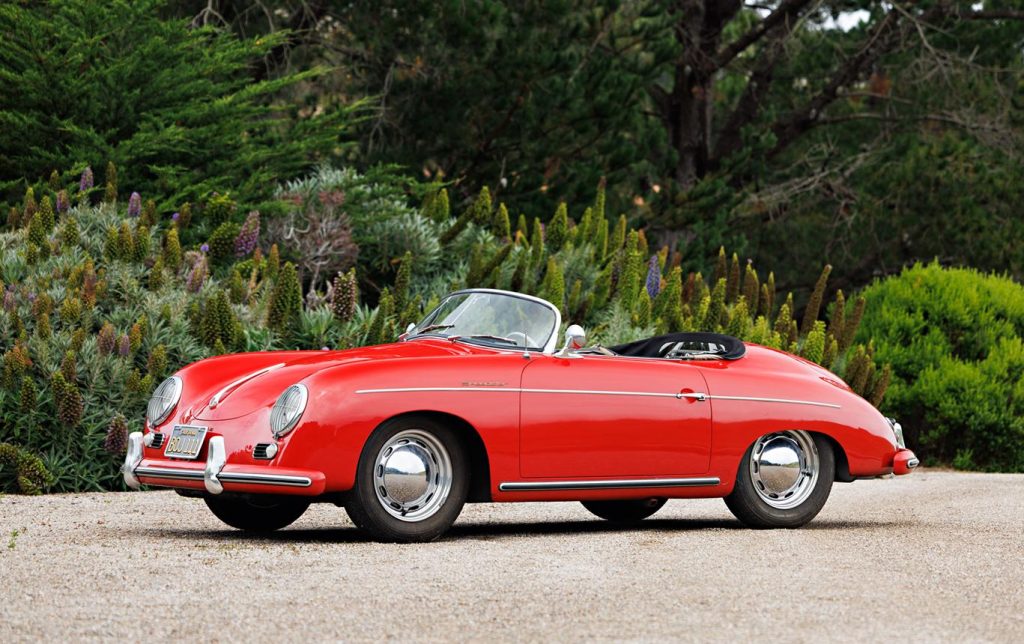
The first Porsche to actually carry the Speedster name arrived in late 1954 as a simpler and considerably less expensive alternative to the 356 America Roadster. Porsche importer Max Hoffmann had pushed for a stripped-down sports car costing less than $3,000, and Porsche responded with a 356 featuring a shortened, raked windshield, reduced interior equipment, lightweight seats, and an emergency soft top. The 356 1500 Speedster cost $2,995 in the United States and quickly became popular in the country’s sunny coastal states.
Porsche 356 Speedster – 1956
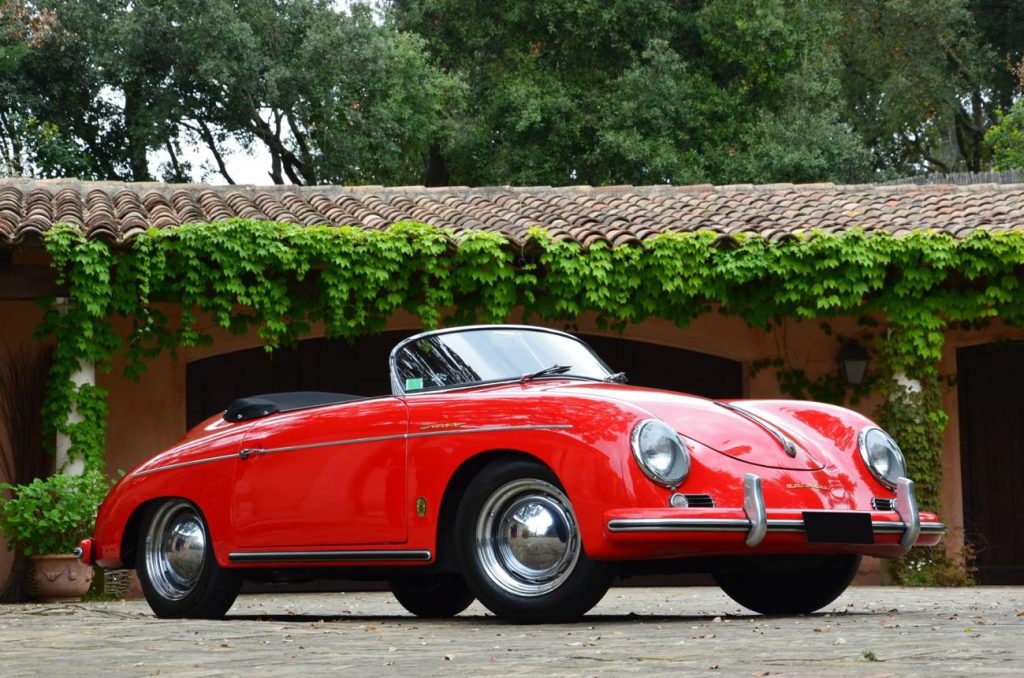
By 1956, the Speedster had established the visual formula that would become instantly recognizable. The low windshield, tiny folding roof, minimalist cabin, and simple two-seat layout gave the 356 an appearance unlike the more conventional 356 Cabriolet. The car also attracted famous enthusiasts, including James Dean, who raced and owned Porsche sports cars during the period. Porsche continued developing the model throughout the decade, eventually producing increasingly powerful versions.
Porsche 356 A 1500 GS Carrera GT Speedster – 1957
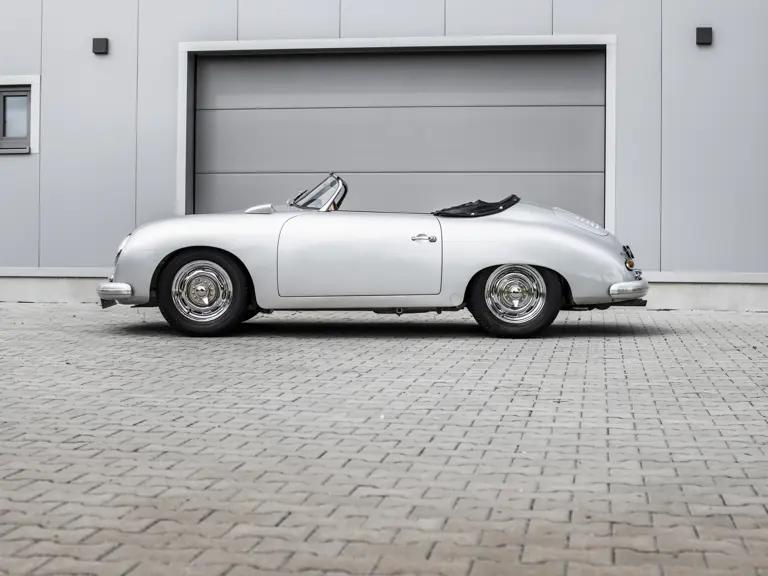
The Speedster formula reached an early performance peak in 1957 with the 356 A 1500 GS Carrera GT Speedster. Its 1.5-liter vertical-shaft engine produced 110 PS, giving this tiny open-top Porsche performance that was remarkable for the period. Porsche says it became the company’s first production model capable of reaching 200 km/h. The combination of low weight, an open cockpit, and serious performance helped establish the Speedster as more than a stripped-down roadster.
Porsche 911 Carrera 3.2 Speedster – G-Series
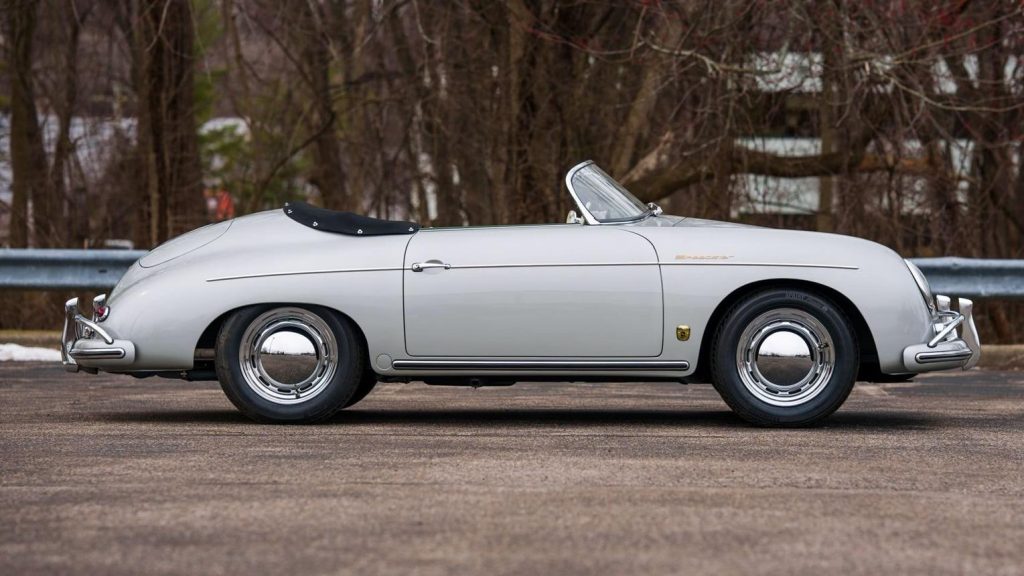
After the 356 Speedster disappeared, Porsche waited decades before reviving the name. The first 911 Speedster arrived in 1988 as the final special model of the G-Series generation. Based on the 231-PS 911 Carrera, it featured a dramatically shortened windshield and a manually operated emergency roof hidden beneath a distinctive double-hump cover. A wide Turbo-look body was available, while 161 narrow-body examples were built for export markets. In keeping with Speedster tradition, Porsche reduced the car’s emphasis on convenience and placed open-air driving at the center of the experience. A total of 2,103 G-Series Speedsters were produced.
1989 Porsche 911 Carrera 3.2 Speedster
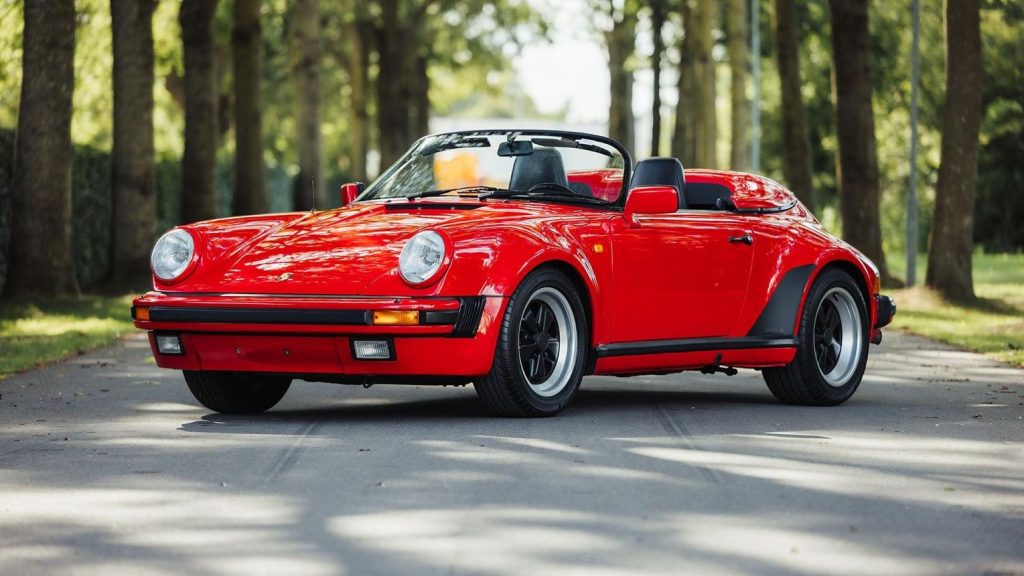 After the 356 Speedster disappeared, Porsche waited decades before bringing the name back for the 911. The 1989 Carrera 3.2 Speedster was one of the final special versions of the G-Series 911 and revived the classic Speedster formula with a dramatically shortened windshield, a minimalist two-seat interior, and a small manually operated soft top tucked beneath a distinctive double-bubble rear cover. Based on the 231-horsepower Carrera 3.2, it was offered with either the standard narrow Carrera body or a much wider Turbo-look body, giving buyers a choice between a more understated interpretation and a more aggressive appearance. With its low-slung profile and stripped-back character, the G-Series Speedster successfully translated the visual language of the original 356 into the era of the classic air-cooled 911.
Porsche 911 Carrera Speedster – 964 Generation
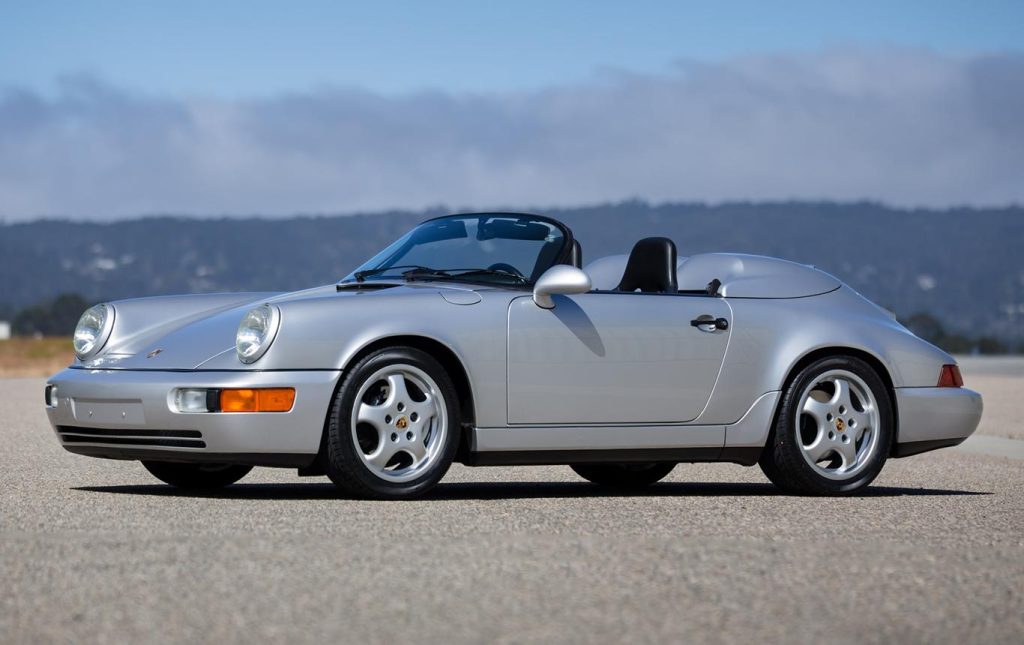
The Speedster returned again with the 964 generation between 1992 and 1993. This time, Porsche produced 930 examples with the narrow Carrera body and just 15 with the wider Turbo-style body. The basic recipe remained familiar: a shortened windshield, two-seat cabin, and manually operated roof designed around the car’s open-air character. Porsche also revised the soft-top mechanism to make opening and closing easier. Compared with the G-Series car, however, the 964 Speedster had the benefit of the 964 generation’s broader technical modernization.
Porsche 993 Speedster – 1995
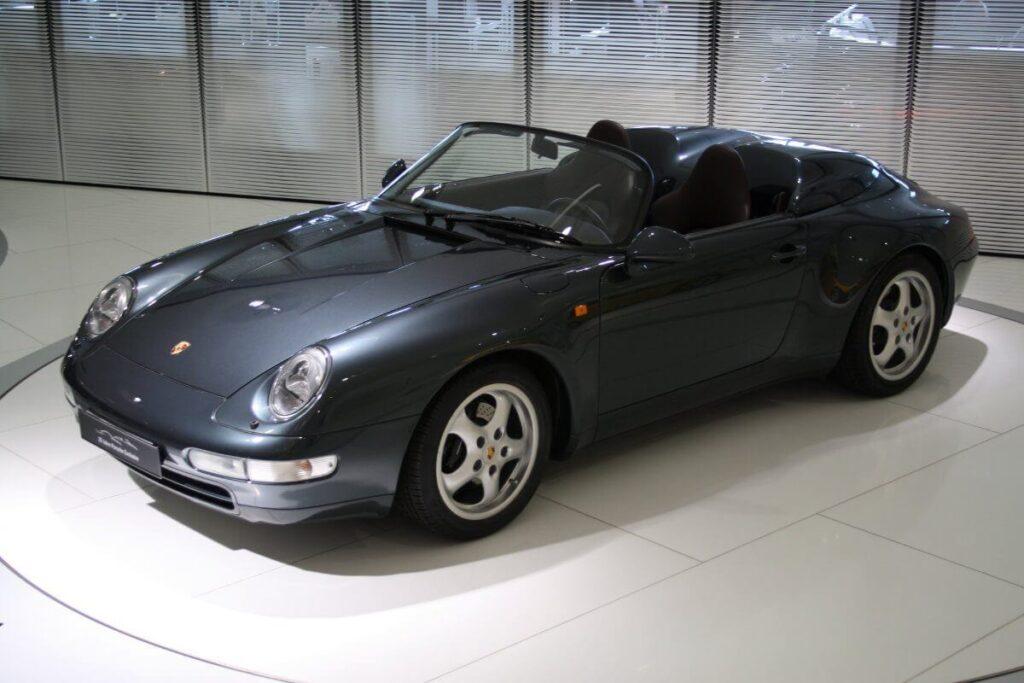
The 993 generation produced perhaps the most exclusive Speedster story of all. Porsche built only two examples, both as special commissions. The first was created in 1995 for Ferdinand Alexander Porsche and featured green paint and a Carrera-based body. The second was built for comedian and Porsche collector Jerry Seinfeld, finished in silver and equipped with a wider Turbo-style body. With only two cars ever made, the 993 Speedster became a fascinating footnote in Porsche history rather than a conventional production model.
Porsche 911 Speedster – 997.2 Generation
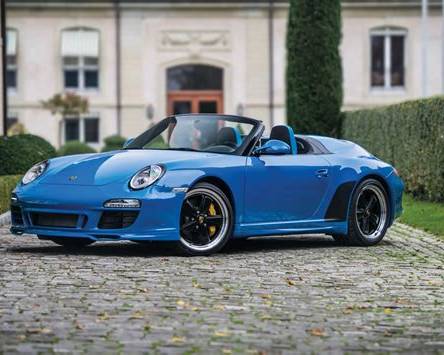
Porsche revived the production Speedster for the 997 generation in 2010. Limited to just 356 units, the two-seat special model featured a 3.8-liter naturally aspirated flat-six producing 408 PS, a wider rear body, a dramatically lower windshield, and the characteristic double-bubble roof cover. Unlike earlier Speedsters, however, the 997’s roof was fully waterproof and suitable for everyday use. Porsche also equipped the car with features including PDK, ceramic brakes, and a sports exhaust, giving this Speedster a much more luxurious character than its minimalist ancestors.
Porsche 911 Speedster Concept – 991 Generation
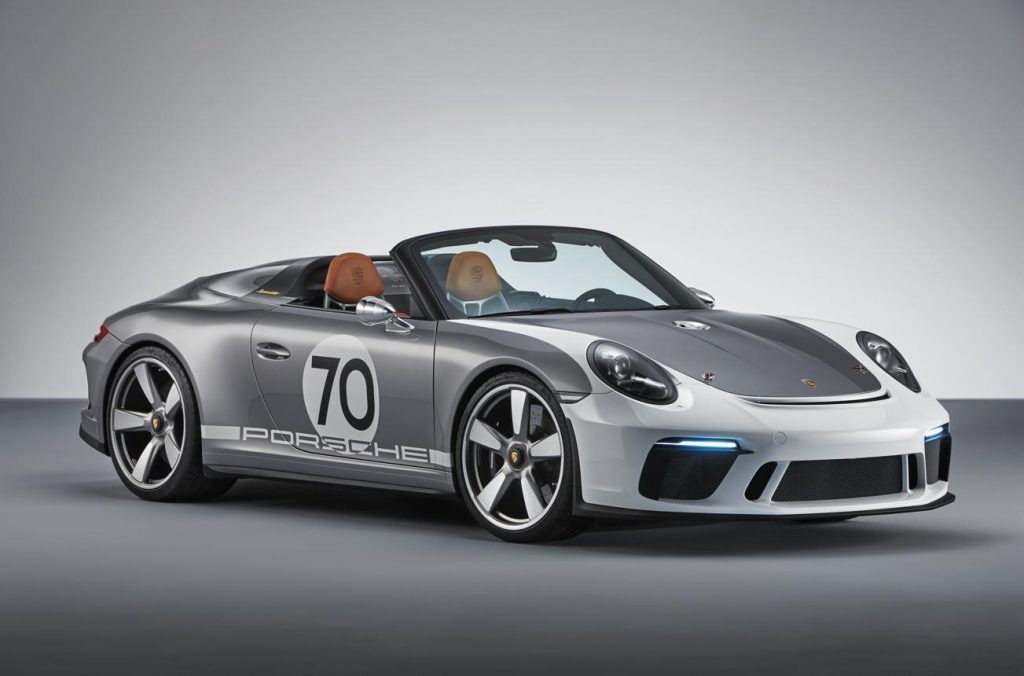
For Porsche’s 70th anniversary in 2018, the Speedster returned as a concept based on the 991 generation. Unveiled in June 2018, the open-top two-seater deliberately connected modern Porsche design with the company’s earliest sports cars. The concept featured a low windshield, distinctive double-bubble rear cover, lightweight construction, and styling references to historic Porsche racers. Porsche subsequently confirmed that the concept would become a limited-production model, with the production car scheduled for 2019.
Porsche 911 Speedster Prototype And Spy Shots
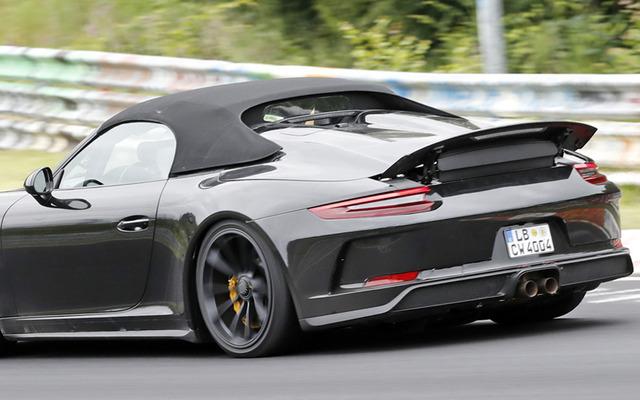
Before the production car was officially revealed, Porsche’s new Speedster appeared in prototype form, giving enthusiasts an early look at how the concept’s dramatic shape would translate to the road. The low windshield and distinctive rear double-bubble design immediately identified the car as a Speedster, while its GT-derived hardware hinted that Porsche intended this version to be considerably more serious than a cosmetic special edition. The finished car would ultimately combine components from the 911 R and 911 GT3 with the Speedster body.
2019 Porsche 911 Speedster – 991.2 Generation
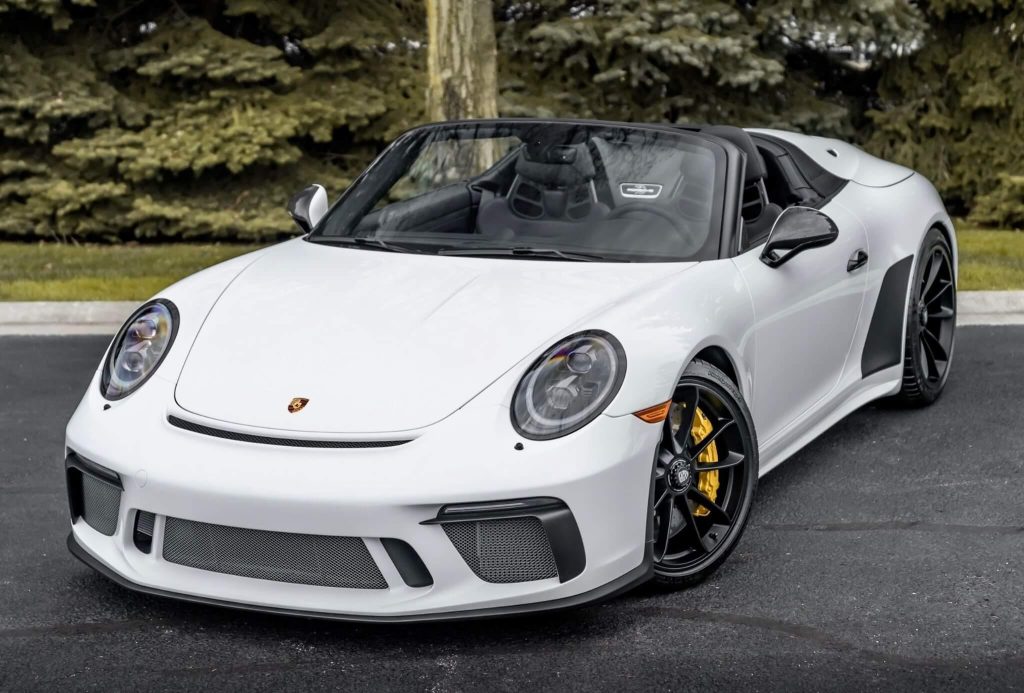
The production 2019 911 Speedster became the final 991.2-series GT car produced by Porsche and arguably the most technically serious Speedster yet. Its naturally aspirated 4.0-liter flat-six developed 502 horsepower in U.S. specification, revved to 9,000 rpm, and drove the rear wheels through an exclusive six-speed manual transmission. Porsche based the car’s development on the 911 R and 911 GT3, creating a combination of motorsport hardware and classic Speedster styling. Production was limited to exactly 1,948 units, a number chosen to reference the year Porsche was founded.
2019 Porsche 911 Speedster Heritage Design
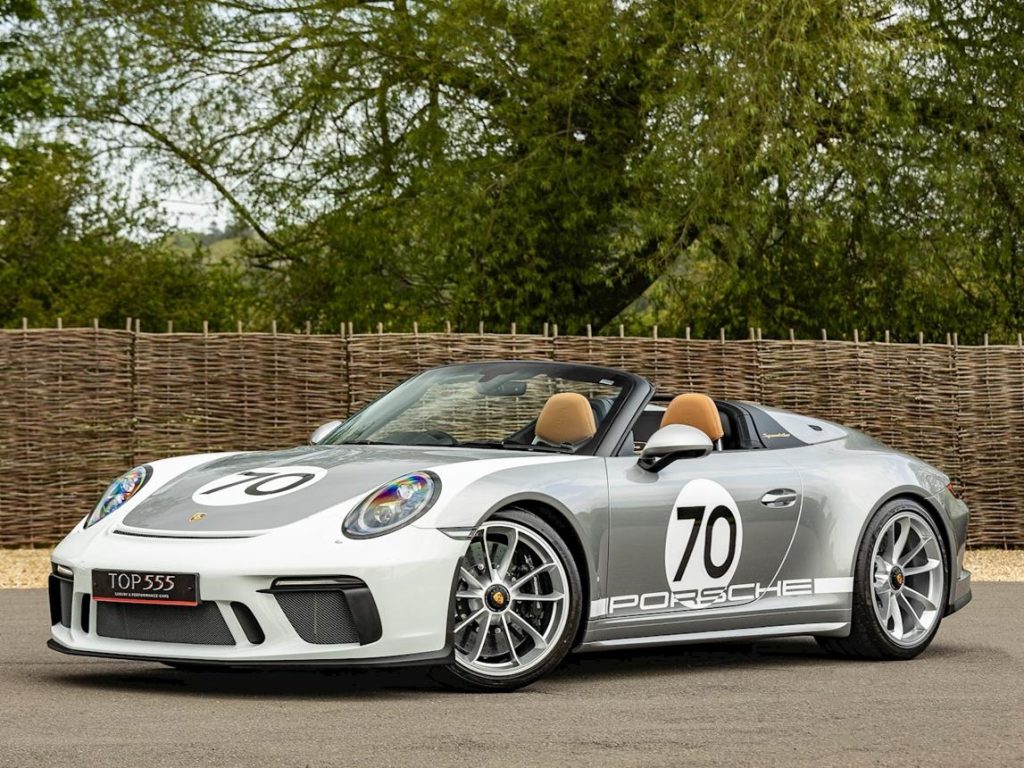
Porsche also offered a Heritage Design Package that pushed the 2019 Speedster’s connection with the past even further. Available exclusively with GT Silver Metallic, the package added white-painted details and racing-inspired graphics based on historic Porsche 356 competition cars. The result was a modern Speedster that intentionally looked backward, connecting the 991.2 car with the lightweight roadsters that established the name more than six decades earlier.
Porsche Design Chronograph 911 Speedster
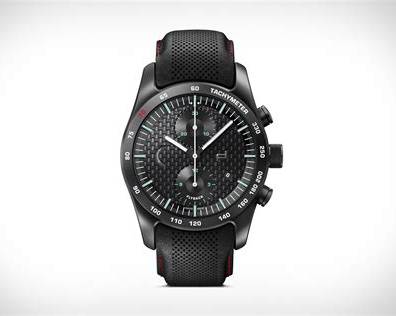
The Speedster story eventually moved beyond four wheels with the Porsche Design Chronograph 911 Speedster. Developed alongside the car, the watch translates several of the 911 Speedster’s design cues into a mechanical chronograph. Its titanium case reflects the emphasis on lightweight construction, while green dial markings reference historic Porsche instruments. Most distinctive is the winding rotor, which takes its design from the 911 Speedster’s wheel and uses a central Porsche crest. The watch is powered by Porsche Design’s WERK 01.200 movement with a flyback function and was limited to 1,948 pieces, matching the production number of the 2019 Speedster. It was offered exclusively to owners of the corresponding 911 Speedster.
The Speedster Formula Has Stayed Surprisingly Consistent
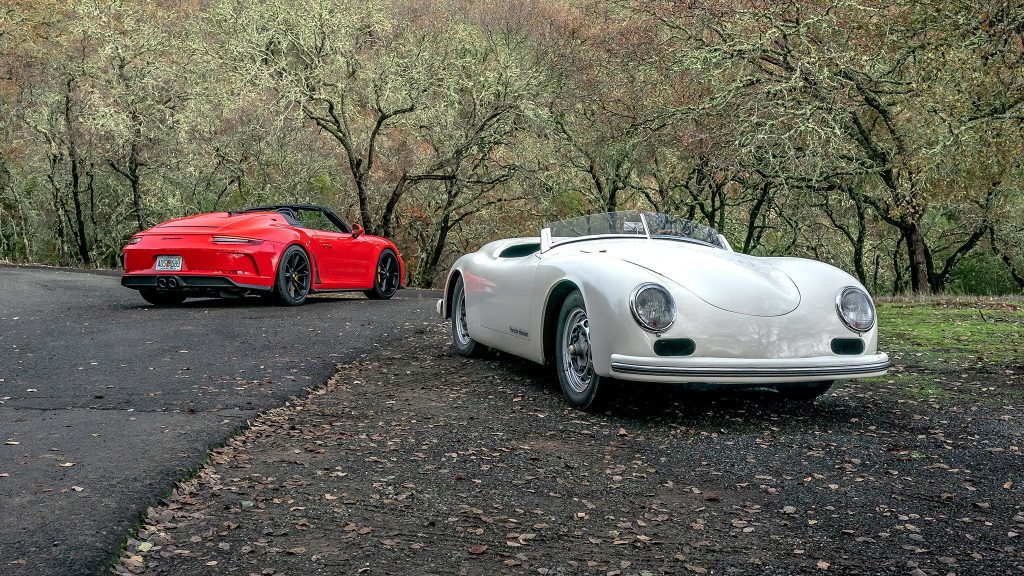
Despite the enormous technological gap between the earliest 356 and the 2019 911, the basic Speedster design language has changed remarkably little. The ingredients remain a low windshield, an open two-seat cabin, a distinctive rear cover, lightweight or performance-focused engineering, and a deliberate reduction in the distance between driver and road. What has changed is everything surrounding that formula. The early Speedster was inexpensive and intentionally spartan, while later 911 versions became increasingly sophisticated performance machines. Even the 2019 model, with its GT3-derived hardware and modern safety equipment, retained the visual character established by the 356 more than 60 years earlier.