
For more than 112 years, Škoda has been building automobiles that have evolved alongside advances in engineering and design. While the brand is best known for its practical and reliable vehicles, its steering wheels also tell a fascinating story of innovation. From elegant wooden rims on early models to today’s multifunction steering wheels packed with buttons and technology, each generation reflects how far Škoda has come.
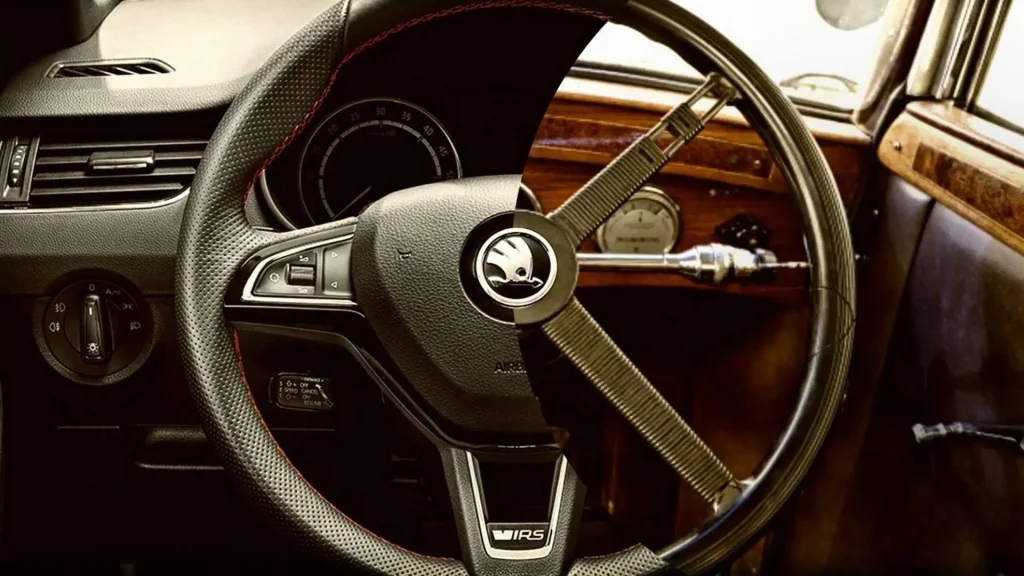
Škoda’s automotive story began in 1905 with the debut of the Laurin & Klement Voiturette A, built when the company still operated under the name of its founders, Václav Laurin and Václav Klement. As one of the world’s oldest continuously operating automakers, the Czech brand has spent more than 112 years refining every aspect of its vehicles—including the steering wheel.
What started as a simple wooden control for guiding an early automobile has evolved into a sophisticated interface packed with modern technology. Over the decades, Škoda’s steering wheels have grown more ergonomic, safer, and increasingly multifunctional, reflecting advances in automotive engineering and changing driver expectations. Comparing the original Voiturette A with the latest Octavia RS highlights just how dramatically both design and functionality have progressed. The brand has even offered a glimpse of the future through the Vision E concept, showcasing how steering controls may continue to evolve in the age of electrification and autonomous driving.
That future may eventually eliminate the steering wheel altogether. As self-driving technology becomes more capable, fully autonomous vehicles could one day make traditional driver controls unnecessary, transforming occupants into passengers. As part of the Volkswagen Group, Škoda is well positioned to benefit from the latest autonomous driving technologies being developed across the organization, making a steering-wheel-free future a realistic possibility.
For now, however, driving enthusiasts can still enjoy the tactile connection that only a steering wheel provides. Performance models such as the Škoda Octavia RS 230 and RS 245 continue to deliver an engaging driving experience, reminding us that while autonomy may be on the horizon, the joy of being behind the wheel remains very much alive.
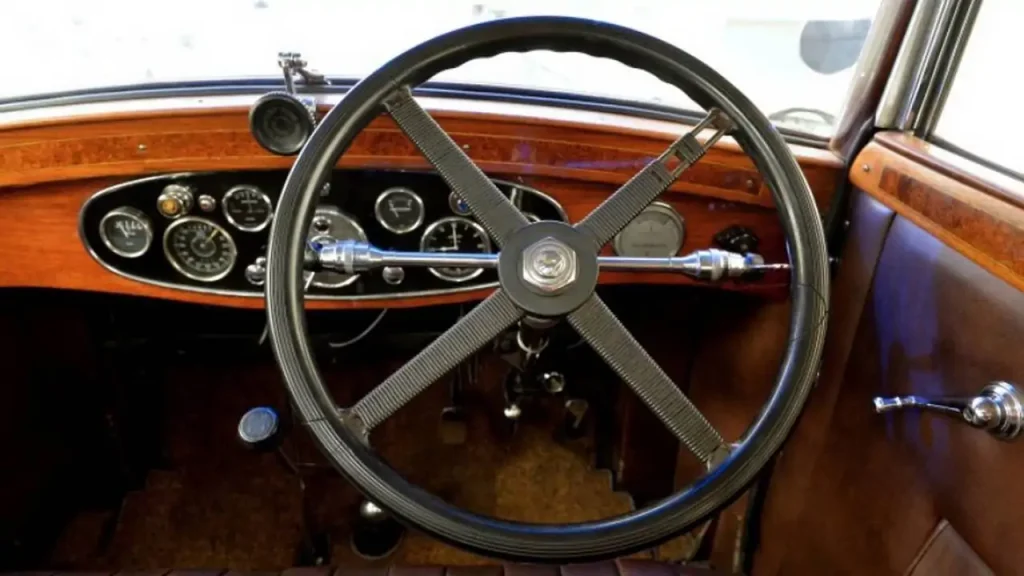
The evolution of Škoda’s steering wheels mirrors the remarkable transformation of the automobile itself. In the company’s earliest years, steering wheels were large, thin-rimmed, and constructed primarily from wood, offering drivers the leverage needed to maneuver vehicles that lacked power steering. These minimalist designs featured no buttons, switches, or safety features—just a simple circular wheel connected directly to the steering mechanism.
As automotive technology advanced throughout the 20th century, Škoda steadily refined its steering wheel designs. Improved materials such as molded plastics, aluminum, and leather replaced traditional wood, while the introduction of power steering significantly reduced steering effort and allowed for smaller, more ergonomic wheels. Driver comfort also became a priority, with thicker rims and sculpted grips providing a more secure and enjoyable driving experience.
Safety innovations dramatically reshaped steering wheel design as well. Energy-absorbing steering columns, collapsible steering shafts, and integrated airbags became standard equipment, helping protect occupants during collisions. These developments transformed the steering wheel from a simple control device into one of the vehicle’s most important safety components.
The digital age brought another wave of innovation. Modern Škoda steering wheels now feature multifunction controls that allow drivers to operate the infotainment system, adjust audio volume, answer phone calls, activate voice commands, and manage advanced driver-assistance systems without taking their hands off the wheel. Performance models such as the Octavia RS also incorporate sportier flat-bottom steering wheels, perforated leather, contrast stitching, and paddle shifters on automatic variants, creating a more engaging driving experience.
Škoda has also embraced sustainable manufacturing as it looks toward the future. New electric models and concept vehicles increasingly use environmentally friendly materials, minimalist designs, and digital interfaces that reduce physical buttons. The Vision E concept demonstrated this direction by presenting a futuristic cabin designed for autonomous driving, where the steering wheel could retract into the dashboard when self-driving mode is activated, maximizing passenger space and comfort.
Looking ahead, steering wheels are expected to become even smarter. Advances in steer-by-wire technology, haptic touch controls, biometric sensors that monitor driver health and alertness, and seamless integration with autonomous driving systems will redefine how drivers interact with their vehicles. While the traditional steering wheel remains an essential part of the driving experience today, its role is evolving rapidly as the automotive industry moves toward electrification, connectivity, and higher levels of automation.