
For four decades, General Motors quietly built and sold Buicks assembled in Switzerland—a fascinating chapter of automotive history that few enthusiasts know about.
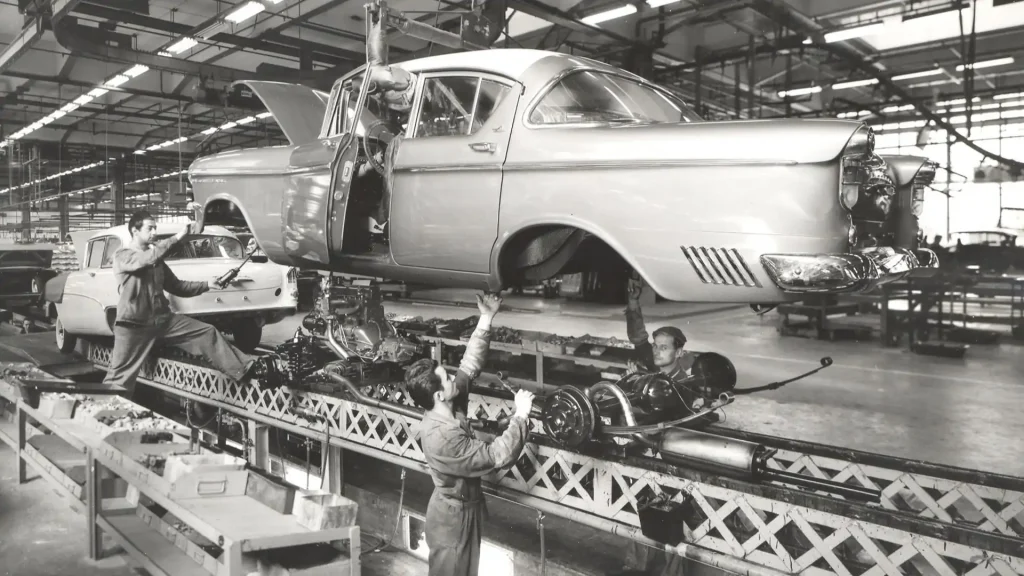
General Motors’ ambitions in Europe have changed dramatically over the years. The company effectively ended its pursuit of becoming a major European volume manufacturer when it announced the sale of its Opel and Vauxhall divisions to Peugeot in 2017. However, there was a time when GM had a much larger footprint across the continent, operating factories in countries such as Belgium, France, Denmark, and even Switzerland.
The idea of building cars in Switzerland may sound unusual today. The country is far more famous for precision watches, banking, and its role in protecting the Vatican than for automobile production. Yet GM once ran a successful assembly operation there—an overlooked chapter of the company’s international history that remains largely unknown outside Switzerland.
The creation of GM’s Bienne (Biel) factory was considered a beneficial partnership for both the automaker and the local community. During the early 1930s, Switzerland was struggling through a difficult economic period, with unemployment reaching record levels in some regions. Local leaders were eager to attract industries that could create jobs and strengthen the economy, making a major automotive investment especially appealing.
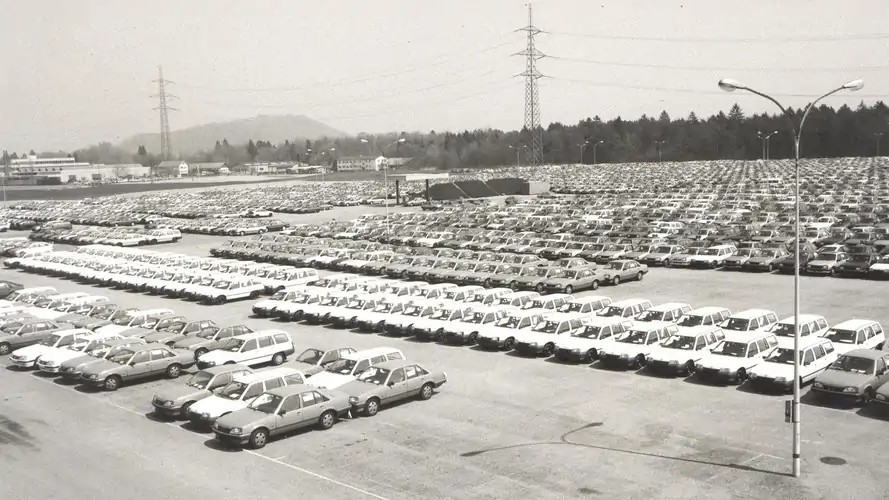
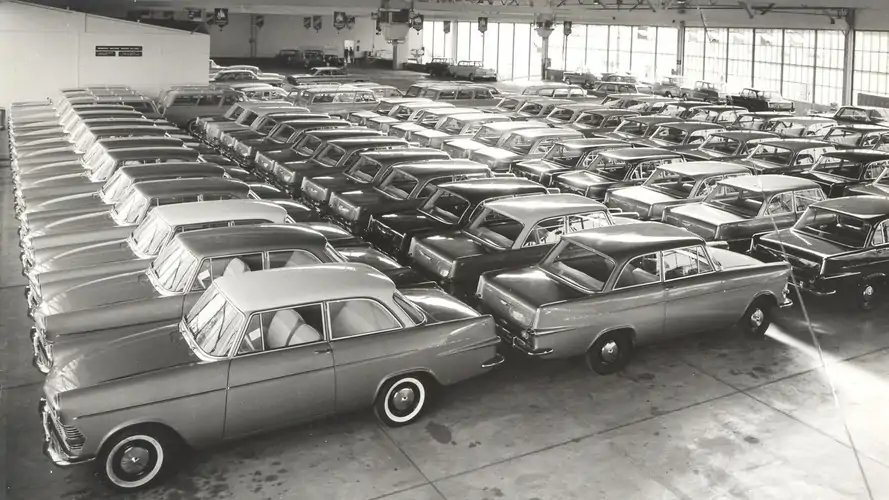
For GM, the timing was equally favorable. According to Alfred P. Sloan’s book My Years with General Motors, sales of European-built Opel and Vauxhall models had surpassed those of American-made vehicles in overseas markets by 1933. Expanding local production facilities became a logical step as the company looked for ways to compete more effectively in Europe.
With that goal in mind, a GM delegation led by Edward Riley, general director of the company’s European operations, traveled to Switzerland in search of a suitable location for a new factory. The team established a temporary base in a Geneva hotel while visiting potential sites throughout the country.
Bienne was not initially considered a leading candidate, but that changed after one memorable phone call. A local official contacted Riley with an ambitious offer, explaining that the city desperately wanted GM’s factory. According to Opel’s archives, the official promised that Bienne could provide abandoned warehouses for conversion into a production facility—or even construct a new factory designed specifically for GM at no cost to the company.
The unexpected offer caught GM’s attention. What began as a search for a European production site would soon lead to the creation of one of the company’s most unusual factories, where American vehicles—including Buicks—would be assembled thousands of miles from Detroit.
Bienne had not been part of Edward Riley’s original plans, but the city’s generous proposal was impossible to ignore. Riley and his team traveled to Switzerland in the fall of 1934 to inspect the location firsthand. Although the abandoned warehouses mentioned by local officials were not suitable for automobile production, GM executives were impressed by the available 325,000-square-foot site and its convenient location near the railway station. After evaluating the options, the company had made its decision—Bienne would become GM’s Swiss headquarters.
Turning that vision into reality, however, was a major challenge for a city facing serious financial difficulties. Funding a new automotive factory required a significant investment, and local officials needed public support before taking on the expense. According to an article in issue No. 193 of Alt-Opel Club magazine, the city planned to borrow roughly two million Swiss francs to finance the project, prompting a public referendum. The proposal received overwhelming approval, with 5,000 residents voting in favor and only 200 opposing it.
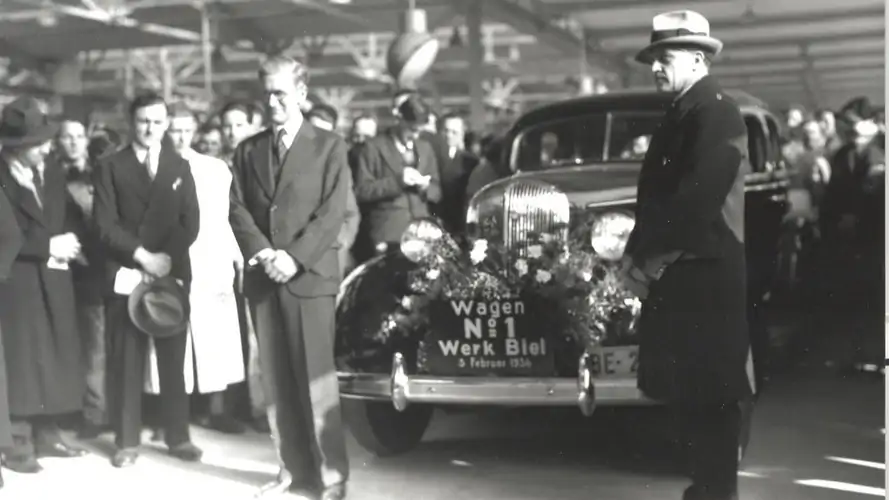
General Motors Switzerland SA officially opened on May 2, 1935, and construction moved quickly. Less than a year later, the first vehicle left the assembly line: a Buick Series 41, built on February 5, 1936. The city followed through on its commitment by financing the factory’s construction, while GM paid modest rent and received tax incentives during its first five years of operation.
Production began on a small but diverse scale. In 1936, the Bienne plant assembled 969 vehicles. Chevrolet and Opel accounted for the largest shares, producing 321 and 318 cars respectively, while the remaining output consisted of Buick, Oldsmobile, LaSalle, and Vauxhall models.
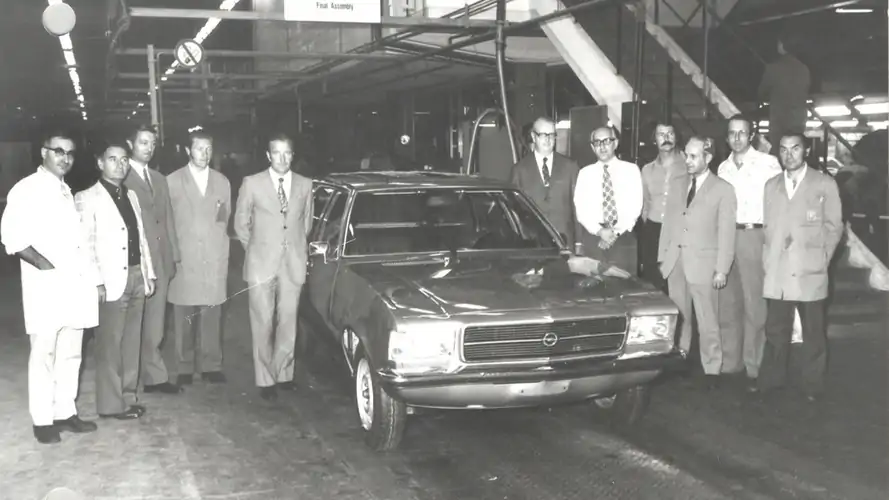
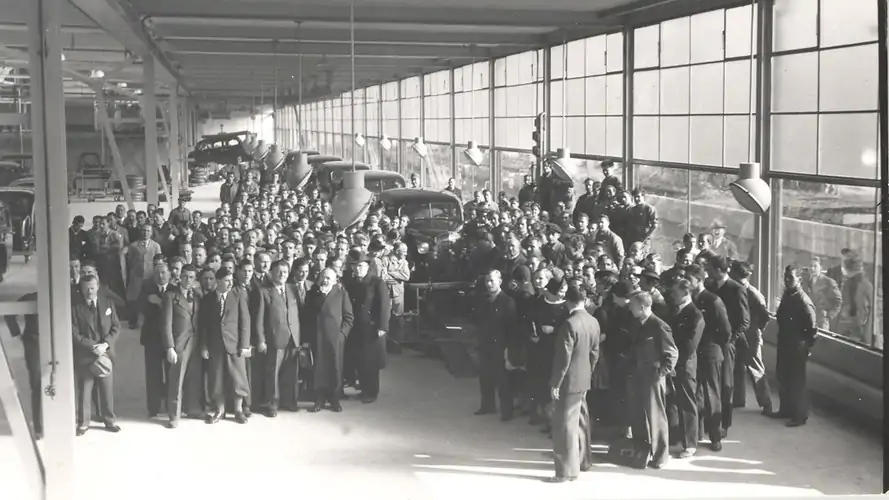
The factory operated as a true international production hub, combining American engineering with Swiss manufacturing. Certain components, including body panels and mechanical parts, arrived from the United States, while many other pieces were supplied by local companies. Headlight lenses came from Geneva, batteries were sourced from the canton of Vaud, glass was produced in Lausanne, and even the dashboard clocks carried Swiss origins—a fitting detail for automobiles built in the country famous for watchmaking.
Production at the Bienne factory began to suffer as World War II disrupted supply chains and reduced demand. In 1940, the plant managed to assemble only 979 vehicles, including six Cadillac models. By the following year, output had collapsed even further, with just 98 cars leaving the factory.
World War II brought widespread disruption across Europe, and GM’s Swiss operations were hit hard by the conflict. Production steadily declined as materials became scarce and markets disappeared. The Bienne factory assembled only 979 vehicles in 1940, including six Cadillacs, before output plunged to just 98 cars the following year.
By 1942, vehicle production had stopped completely, and no new cars were built at the facility until the war ended in 1945. However, the factory remained active in other ways. Prewar Chevrolet limousines were converted into utility vehicles by removing portions of their bodies and transforming them into pickup trucks. Part of the facility was also leased by the Red Cross, while GM employees contributed to Switzerland’s wartime efforts.
Although Switzerland remained neutral throughout the conflict, the country mobilized hundreds of thousands of citizens for defense. Workers at Bienne adapted their skills to support the national effort: the upholstery department produced equipment bags for soldiers, the welding section manufactured ammunition containers, and some employees helped repair railway cars.
When peace returned, GM faced uncertainty about the future of its overseas operations. Production resumed cautiously in 1946, with only 482 vehicles leaving the factory, most of them Vauxhalls along with a small number of Pontiacs. However, demand for automobiles quickly recovered, and output increased year after year through the end of the decade. During this recovery period, Bienne-built vehicles began reaching markets beyond Switzerland, including Austria, Italy, and Yugoslavia.
In 1947, General Motors purchased the Bienne facility from the city and began a major restoration program. The company also invested in employee amenities, adding recreational facilities such as tennis courts and a soccer field in 1949. As production expanded, the workforce grew from just a few hundred employees before the war to more than 1,000.
The 1950s represented the factory’s golden era and its most varied period. While Chevrolet, Opel, and Vauxhall models made up the majority of production, Bienne also assembled smaller numbers of Buick, Pontiac, and Oldsmobile vehicles each year. Most of these cars closely matched their American counterparts, though some components were sourced locally. The Swiss facility also developed several unique models tailored specifically for regional customers, adding another distinctive chapter to GM’s European history.
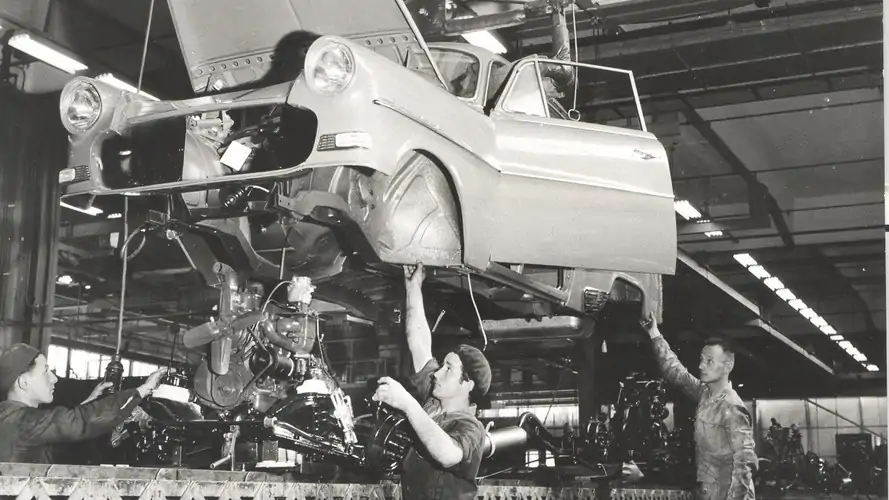
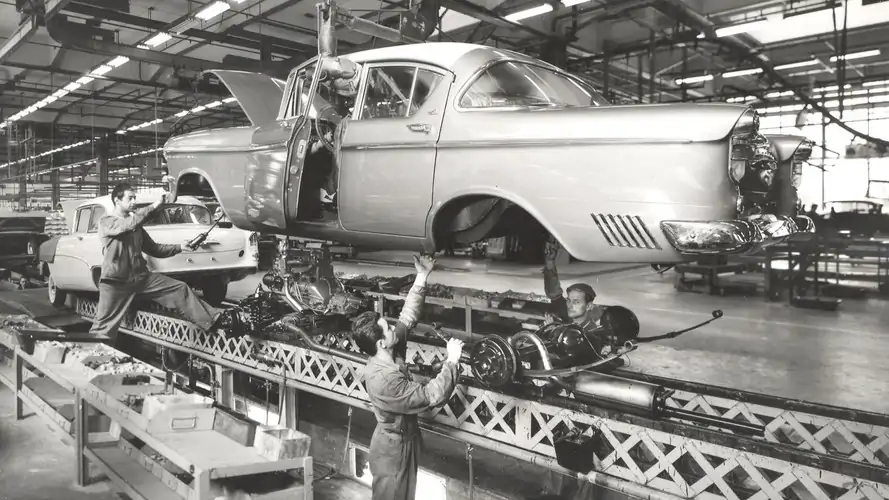
Between 1955 and 1957, General Motors committed $6 million to expand and modernize the Bienne facility. The investment paid off quickly, with the factory’s annual production climbing to 12,484 vehicles by 1958.
According to Louis F. Fourie’s book On a Global Mission: The Automobiles of General Motors International, the Bienne operation also produced several unusual vehicles beyond standard GM models. Swiss coachbuilder Reinbolt & Christé, based in Basel, created custom convertibles using Chevrolet and Buick chassis supplied by the factory.
One of the more interesting projects came in the late 1930s, when the Swiss military was searching for a practical open-top vehicle capable of carrying six passengers. In response, the Bienne facility modified a Chevrolet sedan by removing the roof and installing an Opel-sourced 2.5-liter inline-six engine. The combination proved useful enough that the engine option was later made available to private customers until 1953.
General Motors continued expanding the Swiss operation during the mid-1950s, investing $6 million into the Bienne factory between 1955 and 1957. The upgrades helped increase production, with output reaching 12,484 vehicles in 1958. Most of these cars were sold within Switzerland, reinforcing GM’s position in the local market.
However, the factory’s lineup began shrinking during the 1960s. GM gradually phased out Buick, Pontiac, and Oldsmobile production, shifting its focus toward Chevrolet, Opel, and Vauxhall models. Despite the reduced variety, Bienne still assembled some notable vehicles, including the Chevy II, Corvair, Camaro, and Chevelle, though production numbers remained relatively small.
Selling larger American-style cars became increasingly difficult as European buyers moved toward smaller, more fuel-efficient vehicles. Faced with declining demand, GM ended Chevrolet production at Bienne in 1968 and concentrated on its European brands.
The move toward Opel and Vauxhall initially proved successful. The factory reached its highest production level in 1969, assembling 18,265 vehicles. However, quality problems with some British-built Vauxhall models hurt GM’s reputation and weakened the company’s position in the European market.
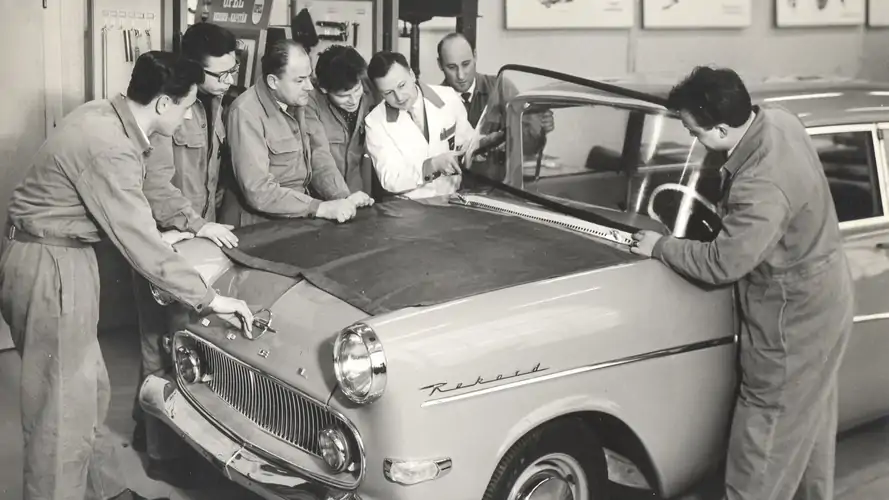
A major blow came in 1972 when Switzerland entered a free-trade agreement with the European Economic Community (EEC). The country began adjusting its trade policies to align with EEC members such as France and Germany, reducing the advantages that had made local assembly profitable. Without favorable tariffs on imported components, building cars in Switzerland became far more expensive.
After nearly four decades of production, GM’s Swiss manufacturing story finally came to an end. On August 15, 1975, the final vehicle—a Opel Rekord Caravan—rolled off the Bienne assembly line. In total, the factory produced 329,864 GM vehicles during its lifetime.
Following the closure, the former factory buildings found new uses. Parts of the site were taken over by companies including Swiss supermarket chain Coop, the national postal service, and a local Opel dealership. GM continued using the office facilities as its Swiss headquarters until relocating to Glattpark near Zürich in 2004, marking the final chapter of one of the company’s most fascinating overseas manufacturing ventures.