
They’re expensive, but tax credits, rebates, and other incentives can significantly shrink the premium. Here are the EVs that offered the biggest savings.
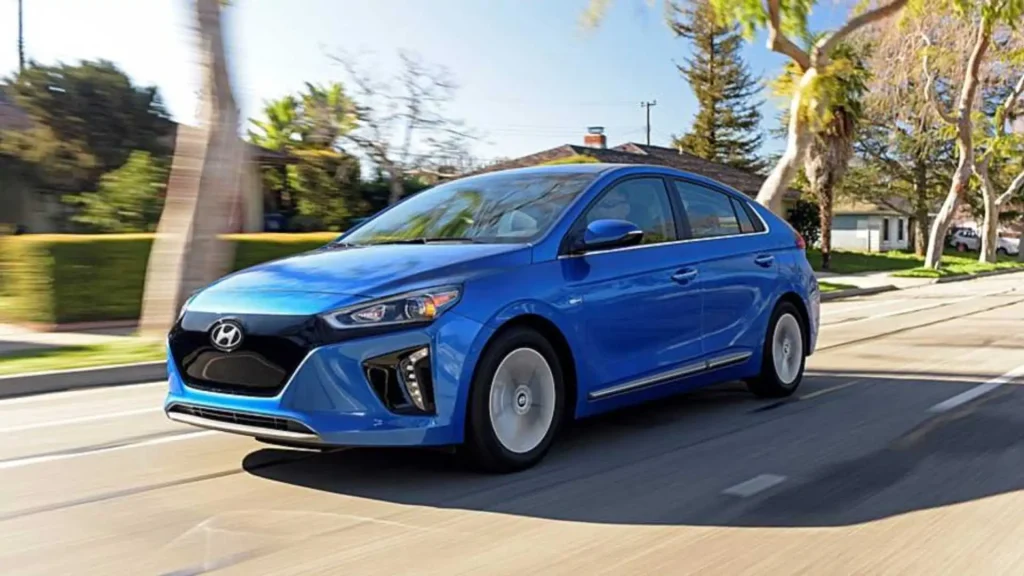
Although owning an electric vehicle can reduce long-term expenses through lower fuel, operating, and maintenance costs, the initial purchase price is typically higher than that of a comparable gasoline-powered vehicle. In 2018, the least-expensive EVs available in the U.S. generally cost between about $25,000 and $33,000, which was a significant amount for cars that otherwise fell into the small economy-car category.
The price difference was especially noticeable when comparing electric models with their conventionally powered counterparts. The compact Ford Focus hatchback started at $21,415, while the Ford Focus Electric carried a $29,999 starting price, although equipment and powertrain differences made the two models less than perfect comparisons. The Volkswagen e-Golf was another example, starting at $33,145 compared with $22,095 for the base gasoline-powered Golf.
Fortunately, buyers didn’t always have to absorb the entire premium themselves. Federal and state incentives, along with manufacturer rebates, could substantially reduce the effective purchase price of an EV. Automakers commonly offered cash incentives of $1,000 or more on qualifying models, while the federal government provided a one-time tax credit of up to $7,500. Some states offered additional incentives, including Colorado’s $5,000 EV tax credit and California’s incentives of up to $4,500, depending on the vehicle and buyer.
There was a catch to the federal incentive, however. The tax credit began phasing out once an automaker reached 200,000 qualifying plug-in vehicle sales in the U.S. Most manufacturers were still well below that threshold in 2018, but Tesla had already crossed it, meaning its federal incentives were scheduled to decline before eventually reaching zero at the end of 2019. General Motors was also expected to reach the 200,000-vehicle threshold later in 2019.
With incentives potentially making a substantial difference in the final cost, the sticker price alone didn’t tell the whole story for 2018 EV shoppers. Below are the five least-expensive electric vehicles available in the U.S. for the 2018 model year, with both their base prices and estimated effective prices after applying the $7,500 federal tax credit. All prices are for base models, include the automaker’s destination charge, and exclude optional equipment.
Table of Contents
Nissan Leaf
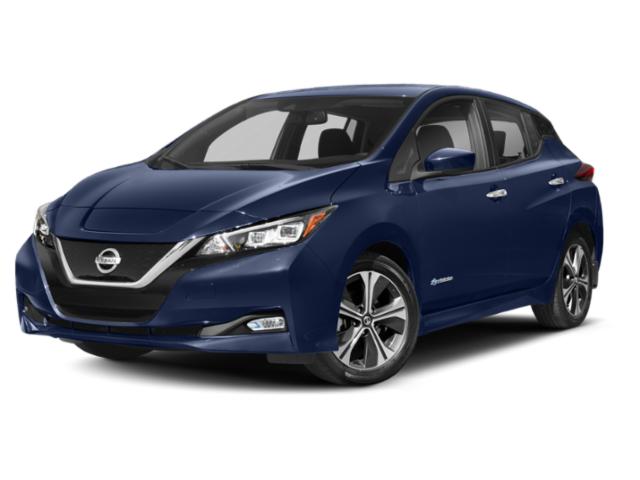
The Nissan Leaf was already one of the best-known electric cars in the U.S. by 2018, and its second-generation redesign made it a considerably more appealing everyday vehicle. Starting at around $29,990, the 2018 Leaf paired a 40-kWh battery with an EPA-rated 151 miles of range, giving buyers considerably more usable range than many of the smaller EVs available at the time. Assuming eligibility for the full $7,500 federal tax credit, the effective cost could fall to roughly $22,490. The Leaf also offered seating for five and a conventional hatchback layout, making it a practical choice for shoppers who wanted an EV without giving up the basic functionality of a traditional compact car. Its combination of reasonable pricing, useful range, and everyday practicality helped establish the Leaf as one of the most recognizable mainstream EVs of its era.
Volkswagen e-Golf
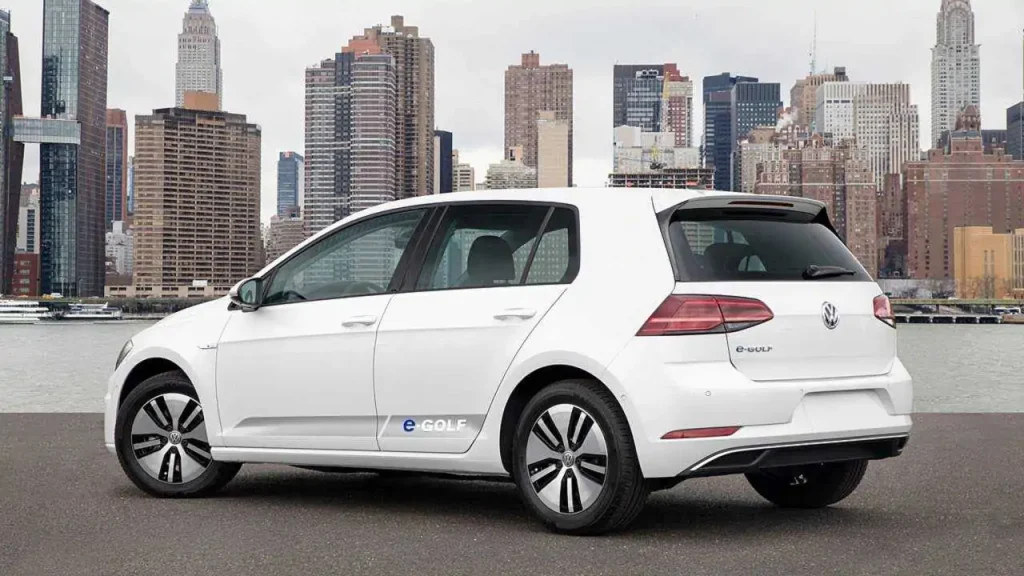
The Volkswagen e-Golf offered an electric alternative without forcing buyers to abandon the familiar Golf hatchback formula. With a starting price of $33,145 including destination, it was considerably more expensive than the gasoline-powered Golf, but the available $7,500 federal tax credit could bring the effective cost down to approximately $25,645 for an eligible buyer. The e-Golf retained the practical five-door body and familiar interior layout of the regular Golf while replacing its gasoline engine with an electric powertrain. That made it an appealing choice for drivers who wanted to experiment with electric ownership without buying something that looked or felt radically different from a conventional compact hatchback. It wasn’t the cheapest EV on the market, but its combination of practicality and familiar Volkswagen design made the price premium easier to understand.
Hyundai Ioniq Electric
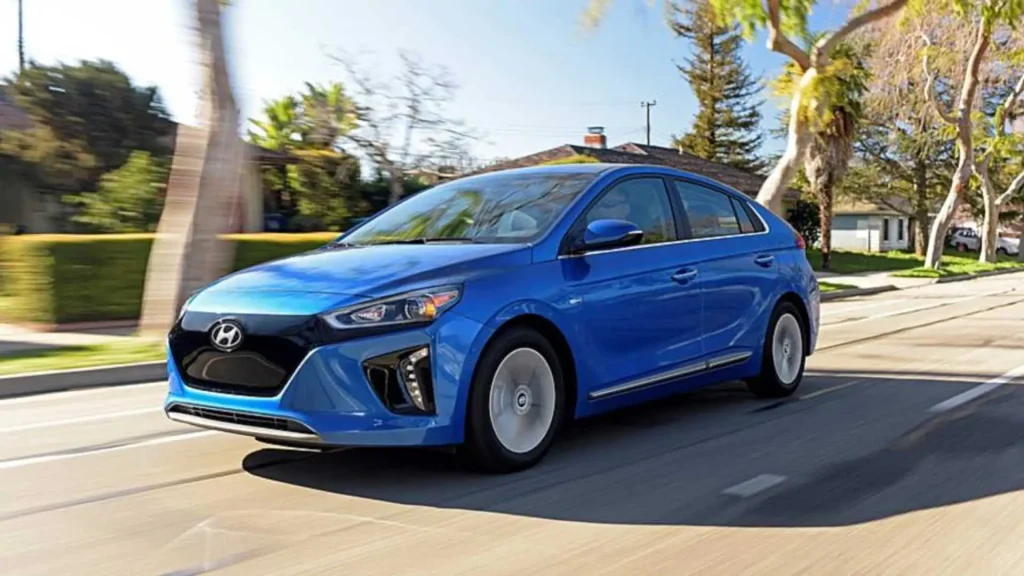
The Hyundai Ioniq Electric approached the EV market from a different angle, putting efficiency at the center of its design. Its sleek, aerodynamic hatchback body was developed to reduce energy consumption, while the electric powertrain provided quiet and inexpensive transportation for everyday driving. The Ioniq’s relatively accessible pricing also made it one of the more affordable fully electric cars available in 2018, and applicable federal incentives could reduce its effective purchase price considerably. Unlike some early EVs that felt like compromises built around new technology, the Ioniq offered a practical cabin, modern equipment, and a conventional five-door layout. For buyers primarily interested in minimizing energy consumption and operating costs, the Ioniq Electric represented one of Hyundai’s most important steps into the growing EV market.
Ford Focus Electric
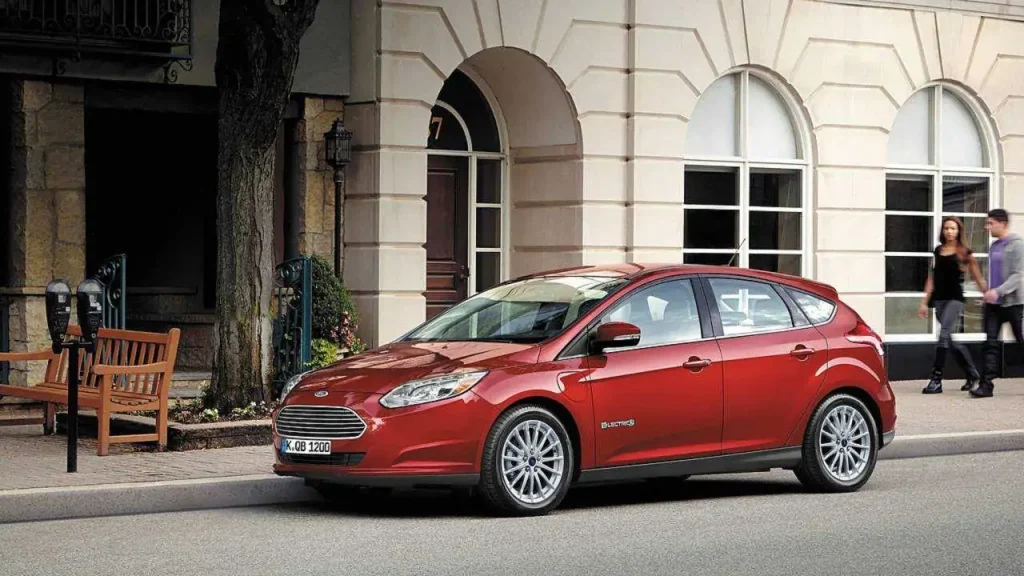
The Ford Focus Electric combined familiar compact-car practicality with an all-electric powertrain, making it an easy-to-understand proposition for shoppers considering their first EV. Its $29,999 starting price was substantially higher than the $21,415 starting price of a conventional Focus hatchback, but the difference could be narrowed considerably by the available federal tax credit. For an eligible buyer receiving the full $7,500 credit, the effective price dropped to about $22,499. The Focus Electric also benefited from the conventional Focus’s familiar proportions, comfortable cabin, and everyday usability, meaning buyers didn’t have to make the leap into a particularly unusual vehicle to go electric. It was essentially a familiar compact hatchback with a very different powertrain, which made it an interesting bridge between traditional cars and the emerging EV market.
Smart Fortwo Electric Drive Coupe
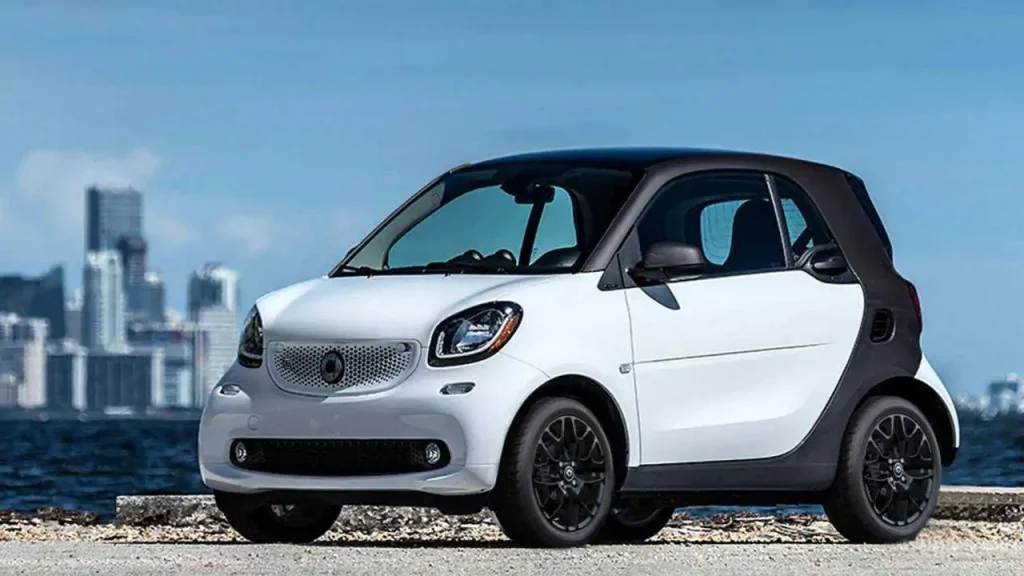
The Smart Fortwo Electric Drive Coupe took the idea of affordable electric transportation in a completely different direction. Rather than trying to replicate the practicality of a conventional five-passenger hatchback, the tiny two-seat Smart was designed primarily for urban environments, where its diminutive dimensions made it exceptionally easy to maneuver through traffic and squeeze into tight parking spaces. Its electric powertrain suited that mission particularly well, providing quiet, emissions-free transportation for short trips around town. Incentives could make the Fortwo Electric Drive even more affordable, helping offset its limitations in passenger and cargo space. It wasn’t intended to be a universal replacement for a family car, but for city dwellers who valued compact dimensions, low operating costs, and electric driving, the Smart offered a distinctive entry point into EV ownership.