
Ford took a much bolder path—and the result is far more exciting than a badge-engineered electric crossover.
By the time the Ford Mustang Mach-E made its public debut in Los Angeles, the controversy surrounding its name was already reaching full volume. For months, Ford had described the electric crossover as merely “Mustang-inspired,” only to reveal that it would officially carry the legendary Mustang badge. Predictably, some Mustang loyalists weren’t thrilled.
The usual argument was that putting the Mustang name on an electric crossover would weaken the brand. But there’s another side to the story: the Mach-E could have been far less interesting. Before Ford settled on the vehicle we know today, the company was working on a much more conventional front-wheel-drive electric crossover—one that Ford employees themselves reportedly referred to as a “compliance car.”
During a heavily restricted briefing at Ford’s Product Development Center in Dearborn, Michigan, members of the team offered a look at the earlier design and explained how the Mach-E took a dramatically different direction.
Ford’s push into battery-electric vehicles was becoming increasingly important. The company recognized that improvements in batteries, charging infrastructure, and consumer interest were changing the market, and it couldn’t rely on earlier efforts such as the Focus Electric or C-Max Energi to establish a serious EV presence.
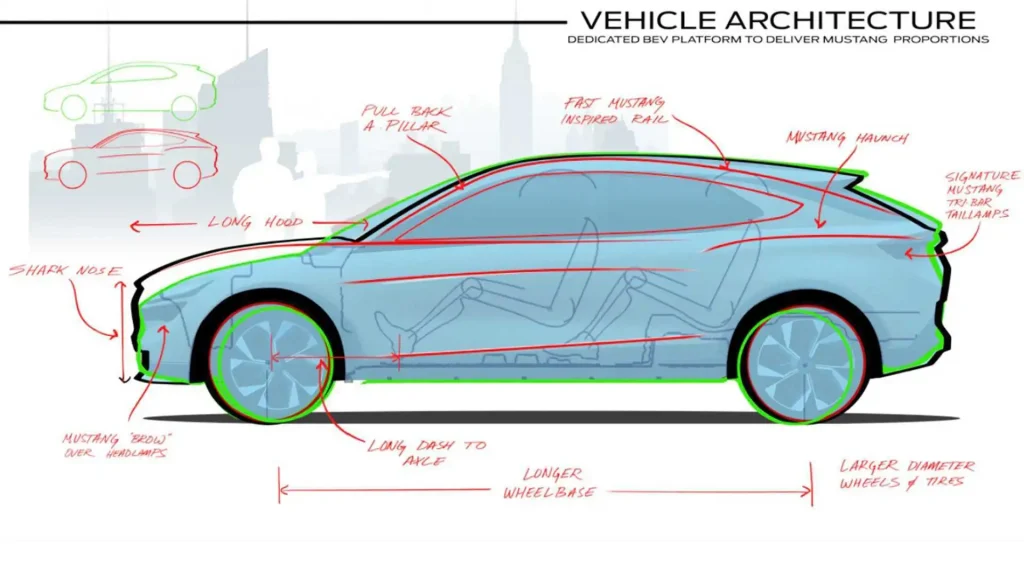
The original plan was already centered on a crossover capable of traveling more than 300 miles on a charge. But the first concept was considerably more conservative than the finished Mach-E. It used front-wheel drive, smaller wheels, a shorter wheelbase, and a shorter hood. The cabin was pushed farther forward, creating a conventional cab-forward silhouette that looked more like an efficiency-focused crossover than a vehicle designed to stir emotions.
In other words, it checked the electric-vehicle boxes without offering much reason for enthusiasts to get excited.
That changed when Jim Hackett became Ford’s CEO. Designers were essentially told to start over, with a new objective: create an EV that didn’t advertise its environmental credentials through its styling. Instead of building another anonymous electric crossover, Ford wanted something with attitude.
That decision was influenced in part by research into how consumers perceive electric vehicles. The findings covered everything from the amusing—42 percent of respondents believed EVs still need gasoline—to the understandable, with more than half expressing concerns about driving range. Even more strikingly, 92 percent described EVs as being “slow or toy-like.” Ford recognized that another uninspiring compliance car wasn’t going to change those perceptions. The Mach-E needed to make a stronger statement.
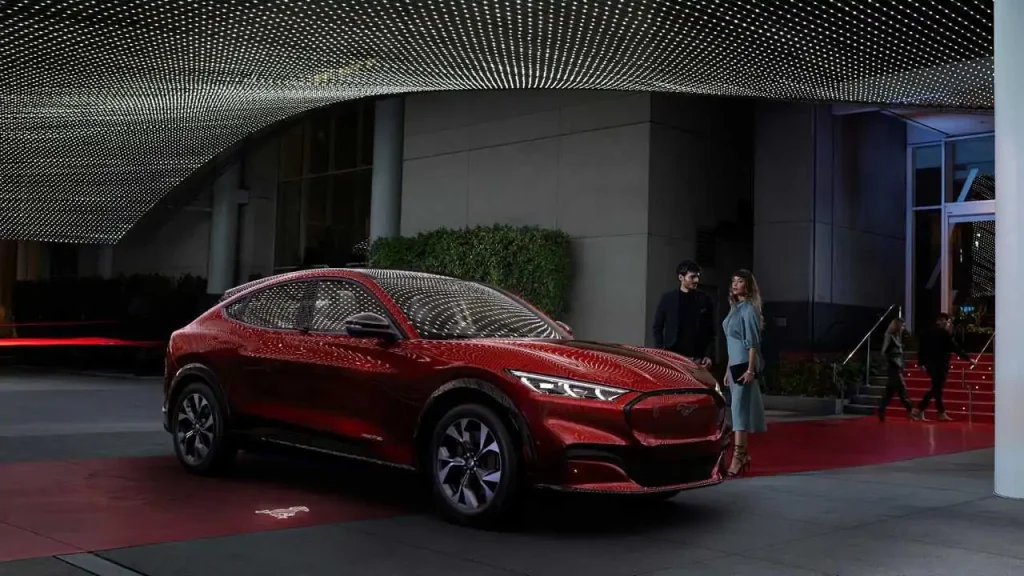
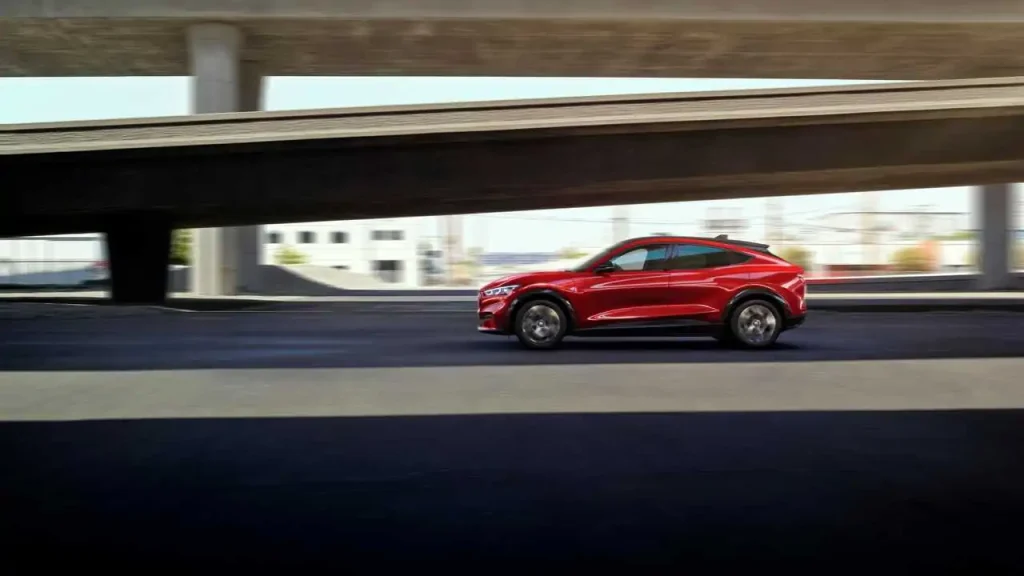
With that goal in mind, the design team essentially started over. Despite the Mustang name, the direct visual connection to the iconic pony car is surprisingly limited, largely consisting of the headlights and signature tri-bar taillights. The designers widened the rear fenders to create a more muscular, rear-drive-inspired stance and lowered the roofline toward the back, helping the Mach-E capture some of the Mustang’s familiar silhouette. Beyond those details, however, the design draws more heavily from broader sports-car proportions than from any single Mustang model.
The hood and dash-to-axle proportion were stretched, while the front end adopted a more upright, shark-nose appearance. Designers also moved the A-pillars rearward, creating a sleeker profile that works with the revised roofline. The wheelbase was extended as well, with the front axle pushed 2.8 inches forward and the rear axle moved 1.6 inches backward. Larger wheels completed the more aggressive transformation.
The relatively late redesign is one of the biggest reasons to be excited about the Mach-E.
The interior is harder to evaluate because Ford only provided a handful of sketches, and those early drawings showed a much more conventional cabin dominated by a large, vertically oriented touchscreen. It’s also unclear whether the exterior redesign affected the available cargo room. Even if it did, the Mach-E still offers useful space, with 29 cubic feet behind the front seats and another 4.8 cubic feet in the waterproof, drainable front trunk.
The relatively late redesign may ultimately be one of the Mach-E’s most important advantages. Ford could have taken the easy route and delivered another bland, efficiency-focused EV with little personality. Instead, the company looked to its most recognizable nameplate for both inspiration and identity. Completely reworking a vehicle and attaching an iconic name to it is a considerable gamble, but based on what we’ve seen, Ford’s decision to take that risk makes the Mach-E far more interesting than simply playing it safe.