
A compact, all-wheel-drive hot hatch with 250 horsepower and genuine rally-inspired attitude.
“Motorsport-Bred Specials have long shared a strong connection with motorsport. Over the years, racing regulations, from rallying to road racing, have required automakers to build a specific number of road-legal cars closely related to their competition machines in order to qualify them for racing.
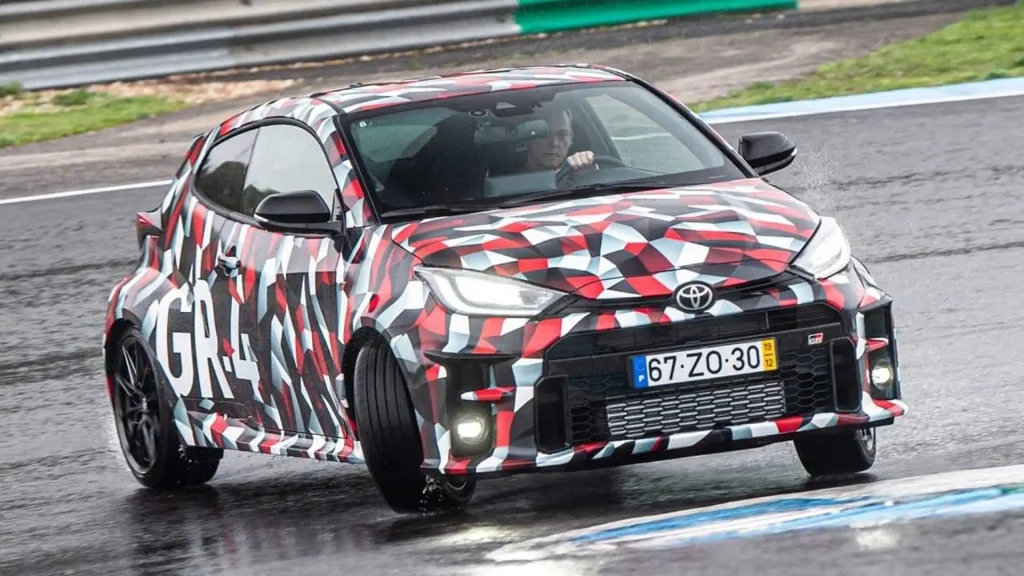
The Lancia Delta S4 and Lancia 037 are two well-known examples. For Toyota, the Celica GT-Four also filled that role during the 1980s and 1990s. Now, the Japanese automaker is bringing that racing-inspired formula back with the all-wheel-drive GR Yaris, something we haven’t seen from Toyota in decades. We drove an early GR Yaris prototype on both the road and track, and here are our first impressions.
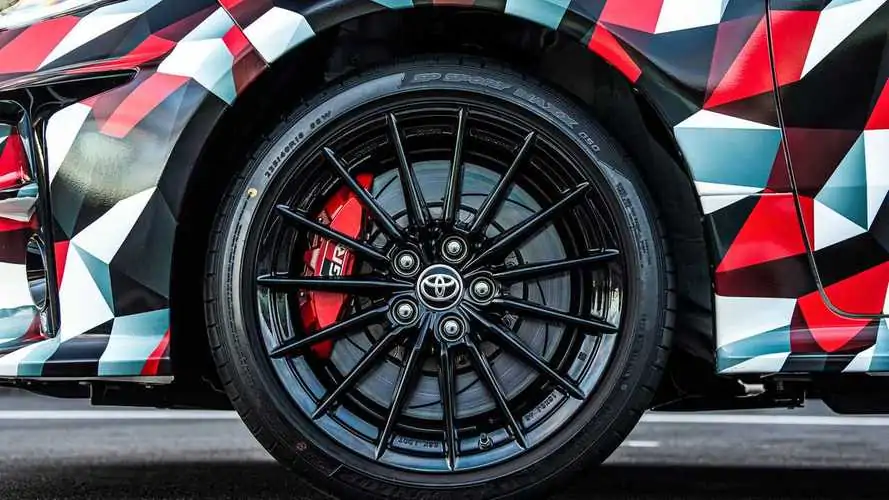
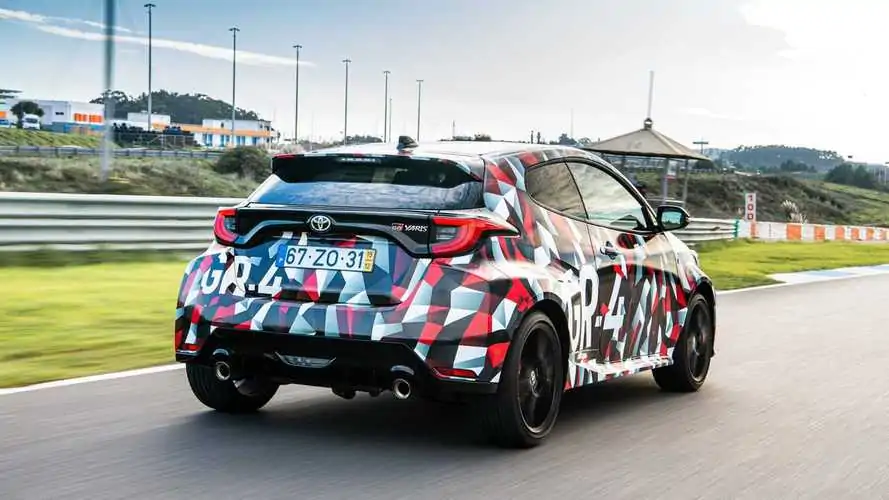
Toyota’s performance division went all-out with the GR Yaris, giving it an aggressive design that clearly separates it from the standard model. Sharp bodywork, larger wheels, flared wheel arches, and a large square-shaped opening in the front fascia give the hot hatch a much more purposeful appearance. The 18-inch wheels also conceal a specially developed brake setup finished with eye-catching red calipers.
Around back, the GR Yaris features twin exhaust outlets positioned near the sides of the bumper, giving the turbocharged 1.6-liter three-cylinder engine a distinctive voice. The rear diffuser, however, is primarily a styling element rather than a genuine aerodynamic device. Full-LED headlights, a carbon-fiber-reinforced plastic roof that drops nearly 10 millimeters toward the rear, and aluminum doors and hood further help reduce weight. Altogether, the GR Yaris weighs just over 2,600 pounds.
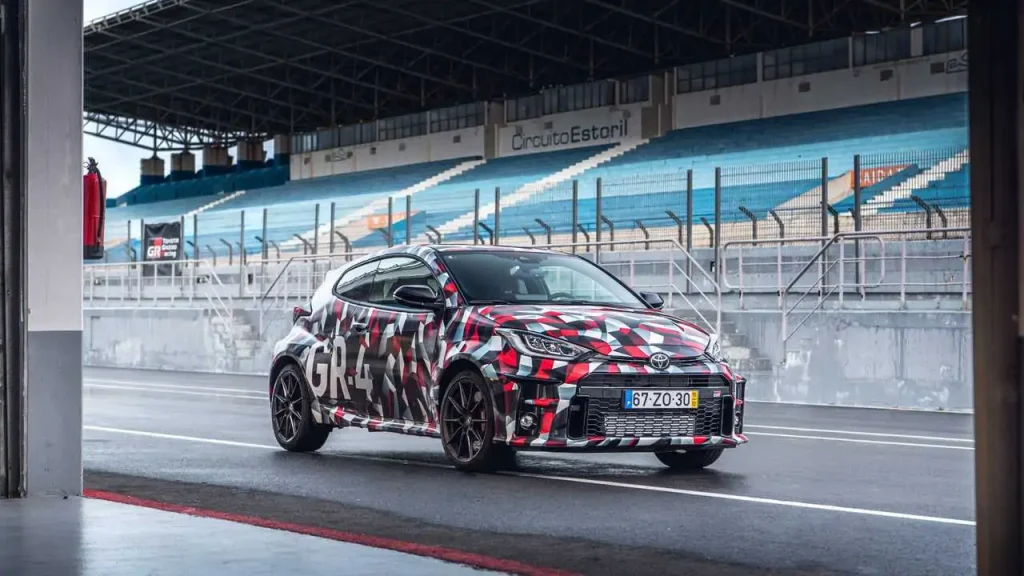
Now it’s time to see what the GR Yaris can really do on the track. This prototype was only about 80 percent complete, and during our limited number of laps, we switched between the standard GR Yaris and a version fitted with the optional Performance Pack. That package upgrades the drivetrain with Torsen mechanical self-locking differentials on both the front and rear axles, replacing the limited-slip differential used in the standard car.
But the engine deserves attention first. The heart of the GR Yaris is its turbocharged three-cylinder, which was positioned 21 millimeters farther back in the engine bay to improve weight distribution. In this prototype, the 1.6-liter turbocharged engine produced more than 250 horsepower and 258 pound-feet of torque, although Toyota had yet to confirm final production figures. Even at this stage, the ferocious acceleration was enough to make comparable performance cars feel surprisingly slow.
The turbocharged three-cylinder is the true star of the GR Yaris.
Both versions of the GR Yaris deliver serious punch. In fifth gear, with six ratios available, the hot hatch can reach 130 mph with remarkable ease, while the engine continues spinning toward its 7,000-rpm redline. There’s little reason to chase the final 1,000 rpm, though, as power begins to flatten out beyond 6,000 rpm. The real sweet spot is in the middle of the rev range, where the engine responds instantly and feels ready to launch the car out of every corner.
The GR Yaris also delivers its acceleration in a way that highlights just how light the car is. You can push the little Toyota hard without it becoming intimidating, and even significant mistakes are met with a surprising degree of forgiveness. Its balance is equally impressive, with a neutral character that lets the available traction determine when the car begins to rotate and loosen up.
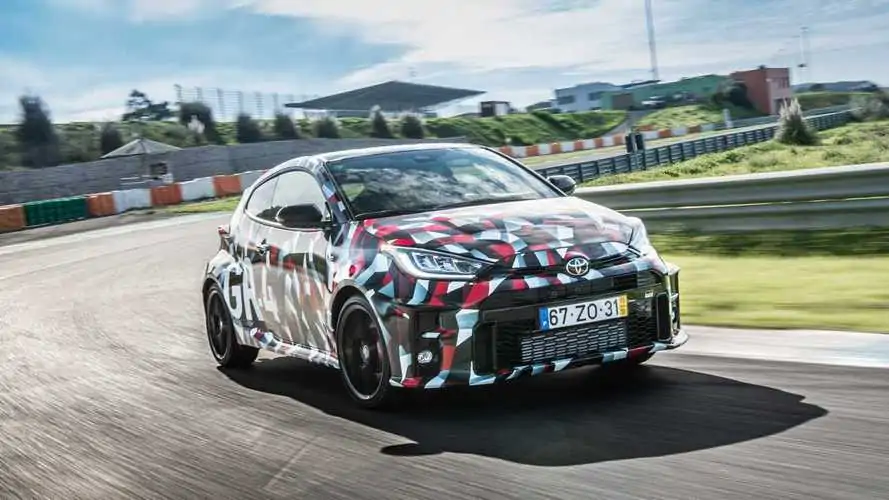
Unfortunately, we couldn’t completely switch off the electronic driver aids, which limited our ability to experience the differentials working at their full potential. The traction control frequently stepped in by cutting power for safety, meaning we sometimes had to wait for the engine to respond again after powering out of a corner. The brakes, however, were excellent, handling every stint without any signs of fade. ABS intervened relatively early, but it rarely took away from the experience under heavy braking. In fact, the system gave us enough confidence to continue braking deep into the corners.
The six-speed gearbox was another highlight, offering quick shifts and a reassuringly sturdy feel. The main drawback was the spacing between the brake and accelerator pedals, which made traditional heel-and-toe downshifts difficult. There was also no automatic rev-matching system, although Toyota could still add one to the production car, and its absence could put additional strain on the drivetrain during repeated track use. The engine note was enjoyable from inside the cabin, although emissions regulations and WLTP requirements meant the road-going GR Yaris couldn’t deliver the full soundtrack of a genuine rally car.
Can the GR Yaris handle everyday life? Absolutely.
A proper road drive would have given us a better opportunity to explore the GR Yaris in its natural environment. Unfortunately, the sun went down before we could safely push the car on public roads, so we adjusted our approach. Even without an aggressive road test, it was clear that the GR Yaris has the manners needed to work as a daily driver.
The engine feels smooth and refined at lower revs, while the exhaust remains relatively quiet, making longer highway trips comfortable without an overly intrusive soundtrack. The suspension is another strong point. Although it remains firm when dealing with rough surfaces, the significantly improved setup compared with the outgoing Yaris GRMN makes the GR Yaris far more practical for everyday driving. The car also benefits from second-level driver-assistance features that add convenience without taking away from its performance-focused character.
Toyota’s involvement in rallying stretches back to 1957, but the Celica TwinCam Turbo became a major player in Group B competition in 1983. To meet the regulations, Toyota had to build 200 road-going examples, and similar requirements followed during the 1980s and 1990s with the Group A Celica. The ST185, for instance, required 5,000 production cars, while the ST205 required 1,000. Under the rules surrounding the GR Yaris, Toyota needed to produce 25,000 road cars to qualify its racing counterpart. That higher production requirement meant the GR Yaris wouldn’t be restricted to a small batch, while larger production volumes could potentially help make the car more affordable over time.
Pricing was still unconfirmed at the time, with an official GR Yaris reveal potentially scheduled for January 10 at the Tokyo Auto Salon. Early estimates placed the car between €40,000 and €50,000, equivalent to roughly $44,000 to $55,000 based on contemporary exchange rates. With Toyota required to produce 25,000 road cars for the racing version, the GR Yaris wasn’t expected to be a limited-run model, with sales anticipated to begin by the end of 2020.