
A look back at a 1967 21-window Bus reveals what Volkswagen’s electric icon needs to get right.
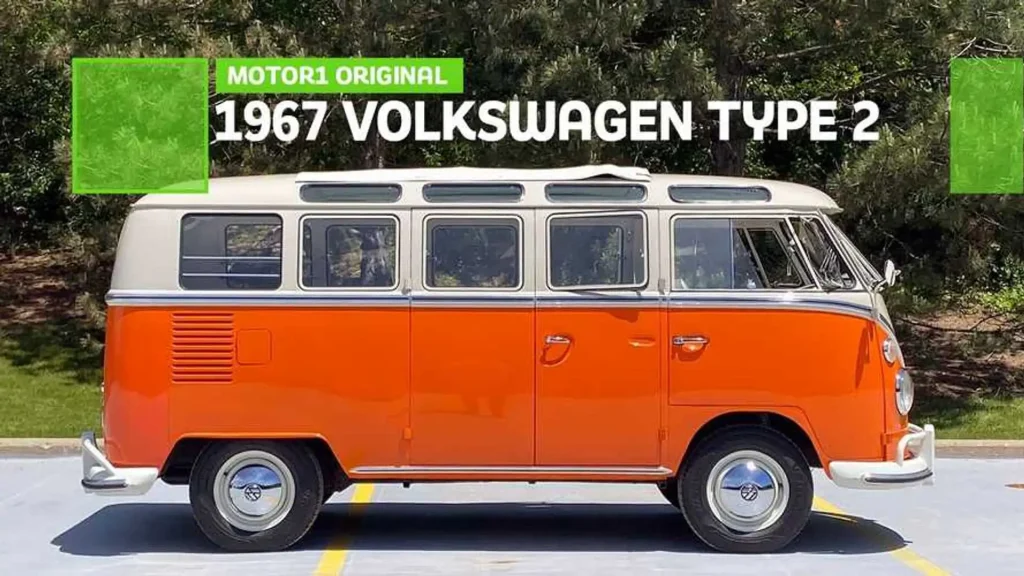
Volkswagen has already confirmed plans to bring the ID. Buzz to production, but the big question is how much of the retro-inspired concept will survive the transition to a showroom-ready vehicle. The original concept was clearly designed as a modern interpretation of the classic Microbus, yet Volkswagen has revealed relatively little about how closely the production van will follow that formula.
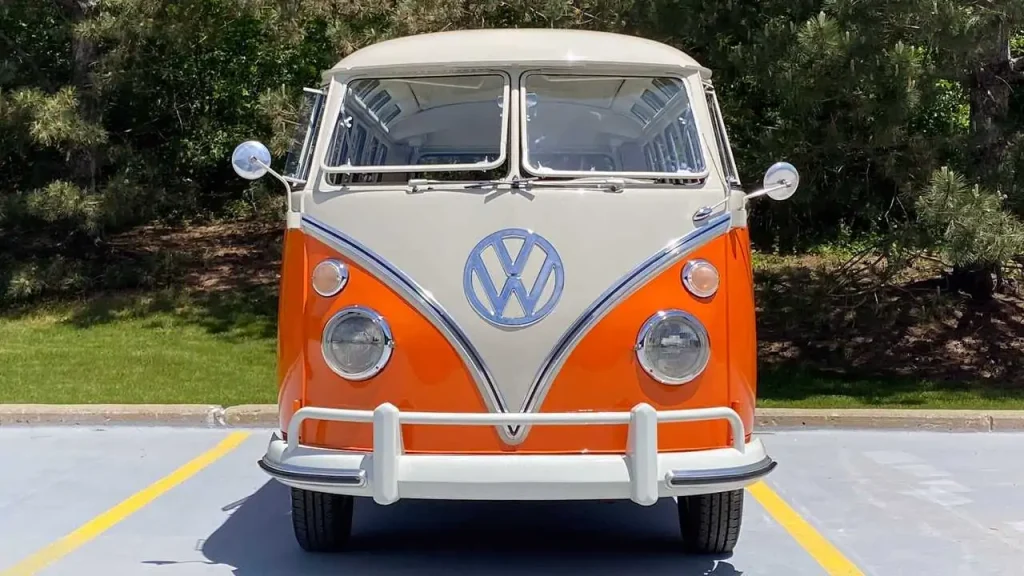
To get a better sense of what made the original so special, I’m skipping ahead from the futuristic ID. Buzz and going all the way back to 1967. That’s where I find a 21-window Volkswagen Type 2 Samba Microbus, complete with three rows of seating and the unmistakable styling that helped make the Bus an icon. It was a very different era: Lyndon B. Johnson was in the White House, the Vietnam War was underway, and the Summer of Love was in full swing as the counterculture embraced vehicles exactly like this one.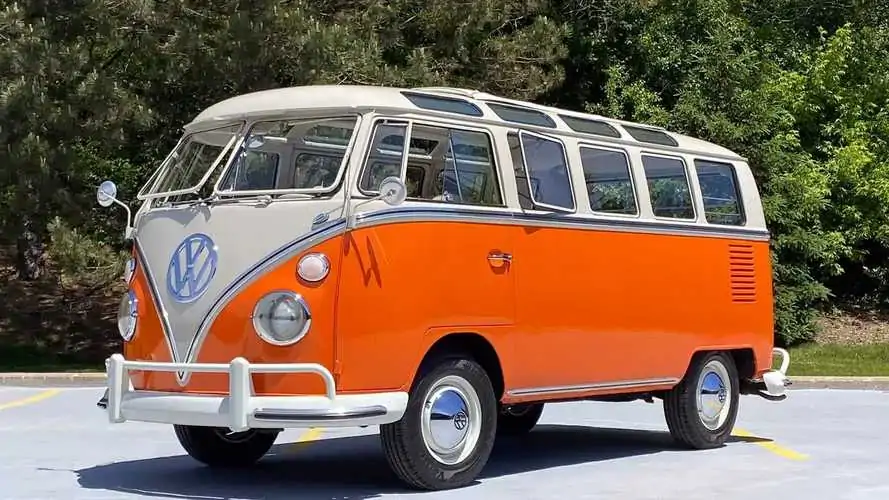
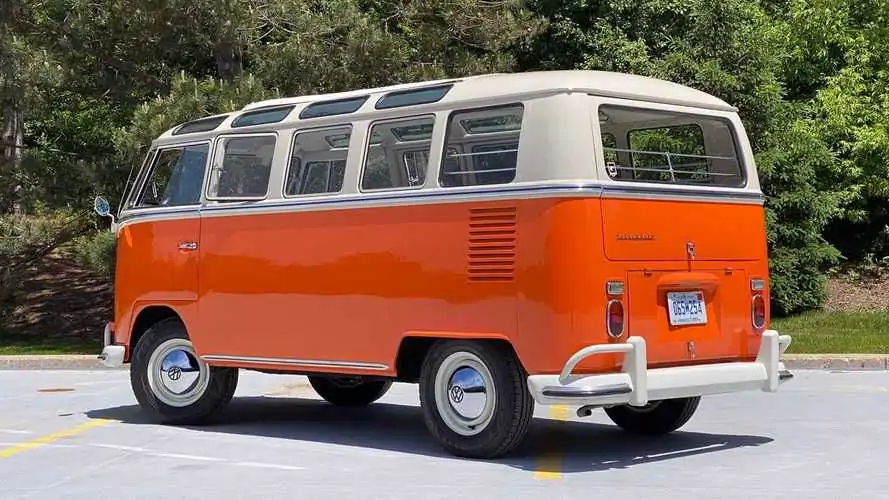
I’m not about to break out an acoustic guitar, light up, or put on a Grateful Dead playlist, but spending time behind the wheel of this 53-year-old Volkswagen still left me thinking about what its electric descendant should deliver. The original Bus has plenty of character, practicality, and charm that I’d love to see carried forward when the all-electric ID. Buzz arrives in 2022. Here are the things I hope Volkswagen keeps in mind.
Keep The Cabin Spacious
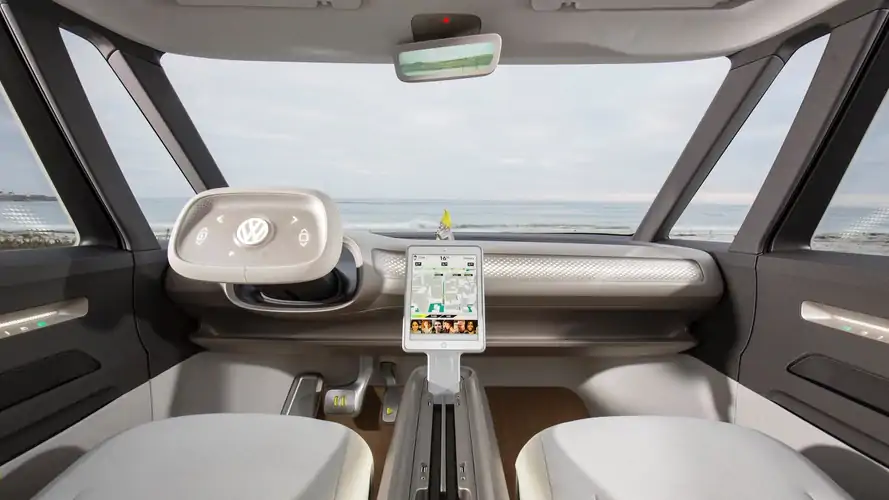
The 1967 Microbus keeps things simple with a front bench followed by another bench in both the second and third rows. Sitting three across up front isn’t exactly my preference, particularly with a manual transmission, but an electric ID. Buzz wouldn’t need a traditional gear lever, making a front bench an interesting way to pay tribute to the original. The Bus’s flat dashboard, short overhangs, and upright layout also create an impressive amount of usable space for front passengers, although the vertical driving position can become tiring over time. The ID. Buzz concept takes a more conventional approach with a center console and a flip-up tablet holder, but that feels like a missed opportunity to embrace the spacious simplicity of the original.
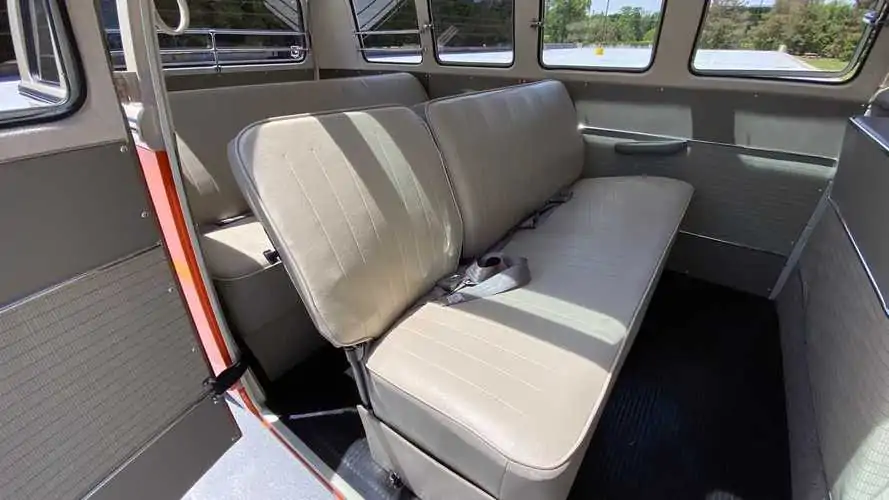
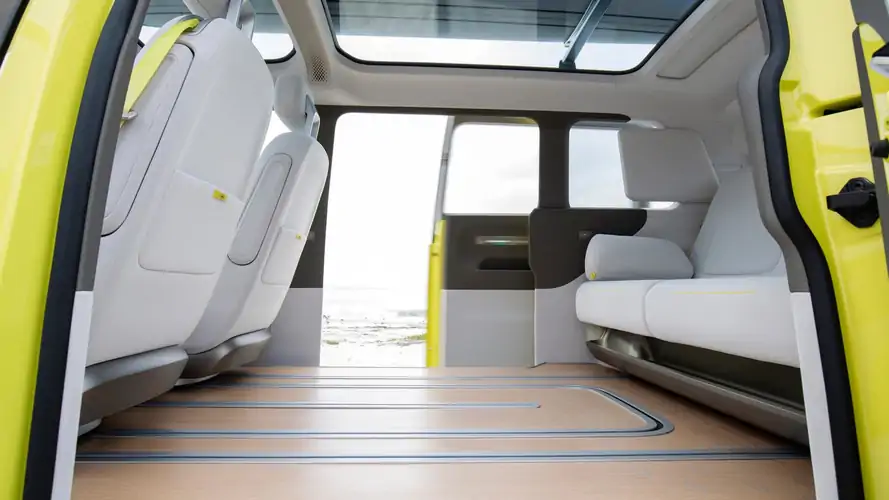
The two rear rows are where the old Microbus really shows its strength as a people carrier. Both benches make excellent use of the van’s considerable width, and while there are only three seatbelts, there’s enough room that I could see four people fitting back there, or even five if they’re good friends. Legroom is generous throughout, and I particularly like the solid bulkhead behind the front seats. It divides the cabin nicely while also contributing some much-needed structural rigidity to the old-school Bus.
That partition probably wouldn’t serve much purpose in a modern EV with a rigid body and a battery mounted low beneath the floor. What Volkswagen should carry over, however, is the Samba’s impressive sense of space. I’d also like to see the production ID. Buzz offer another seating row, since the concept made do with one large rear bench. The original Microbus became synonymous with the idea of traveling together because it could carry a group without feeling claustrophobic. The new electric Bus should preserve that same welcoming, communal character.
Keep It Open And Forget The Air Conditioning
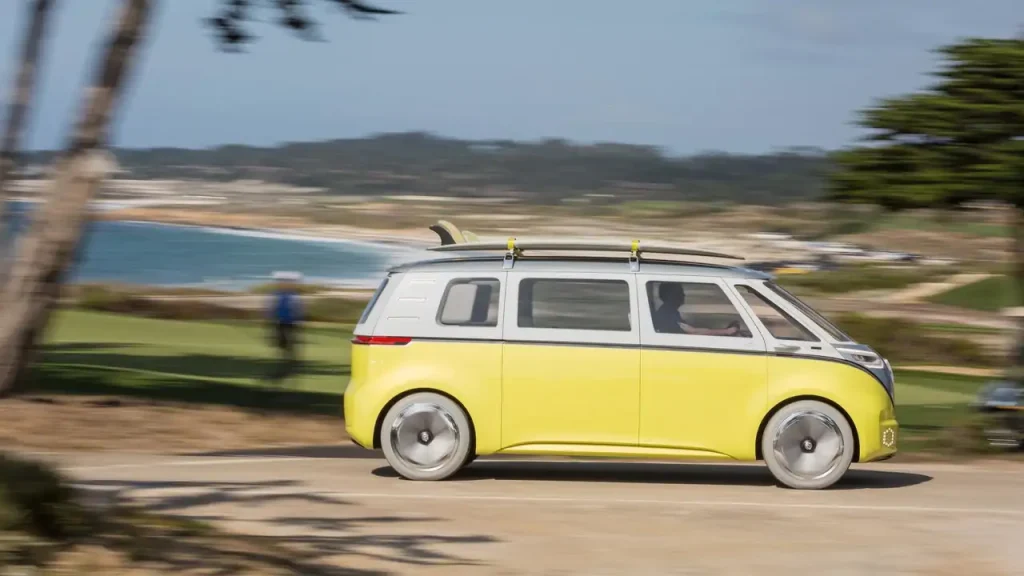
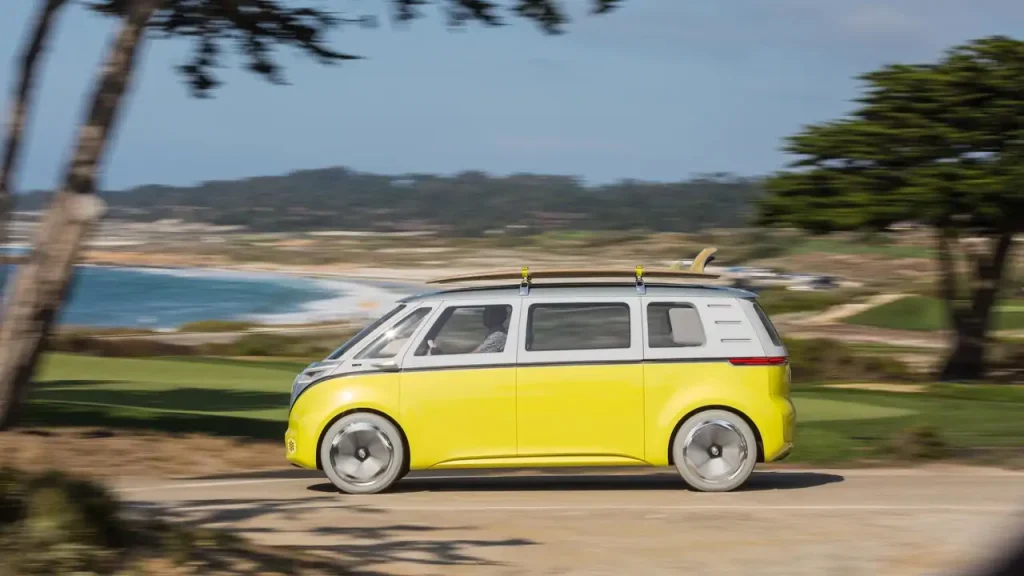
The Microbus feels unusually open from the moment you climb aboard. That’s partly because of its enormous glass area: 13 windows form a continuous band around the body, while four additional panes sit along each side above the main roofline. All that glass floods the cabin with daylight and makes the already spacious interior seem even larger. It also gives the driver exceptional visibility. After becoming accustomed to modern cars that rely on cameras and parking sensors, maneuvering the old Bus is surprisingly refreshing. The huge windows and compact overhangs make it easy to judge the vehicle’s edges, even without power steering.
The glass isn’t just there for visibility, either. Almost the entire cabin can be opened up to the outside, with every window except the three at the very back and the small roof-mounted panes capable of opening. The split Safari-style windshield tilts outward, the front side windows slide down, and each rear row gets its own pop-out windows. It’s an old-fashioned approach to ventilation, but it works remarkably well.
There’s even a clever bit of passive cooling above the windshield. A ram-air intake directs moving air into the cabin, where the driver can send it toward the rear passengers or the front seats. I drove the Microbus during the middle of a hot, humid Michigan summer, and despite the lack of conventional air conditioning, I rarely felt the need for anything more.
The fabric sunroof provides another way to open up the cabin, although I didn’t get around to trying it. Pulling it back would undoubtedly make the interior feel even more expansive. It’s an idea Volkswagen could easily reinterpret for a modern ID. Buzz, perhaps with a large fabric roof, an electric pop-top camper setup, or even solar panels that could help power accessories while the van is parked.
Of course, there’s a catch. Removing air conditioning could theoretically improve an EV’s range, but that benefit would probably be offset once passengers started opening eight or nine windows just to keep cool. More importantly, modern crash standards make the Microbus’s wall of glass difficult to reproduce. A vehicle can have plenty of windows, but it still needs substantial pillars and structural reinforcement to protect occupants in a collision. I’d love to see Volkswagen push the ID. Buzz toward this kind of airy, open design, but recreating the Samba’s greenhouse almost exactly may be asking too much.
Keep The Controls Simple
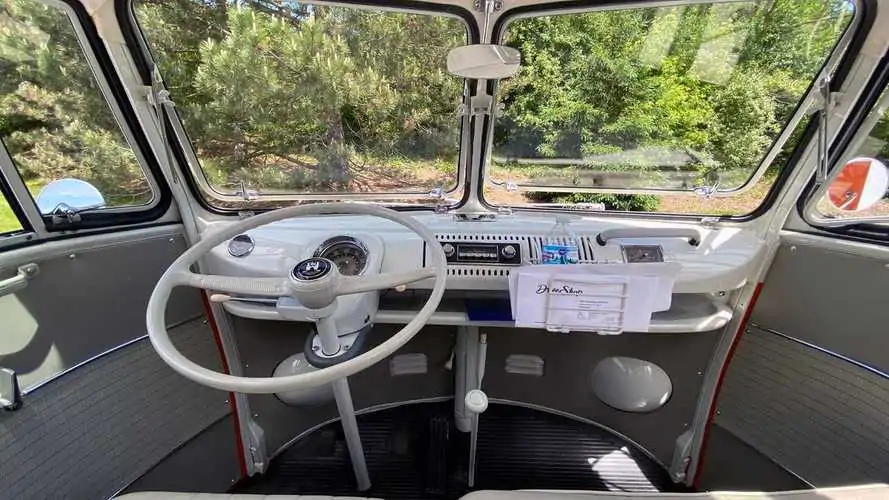
The Samba doesn’t need much information to keep the driver informed. There’s a speedometer, a fuel gauge, a clock, and a radio on the dashboard, and that’s about the extent of it. I’d like Volkswagen to resist the modern temptation to cover the cabin in screens. The ID. Buzz should have a straightforward speedometer and a simple charge indicator, with physical toggle switches handling the charging controls. Put those switches where the old Bus’s radio sits and leave the rest of the dashboard alone. The simpler the better. In an age when automakers seem determined to turn every surface into a display, going in the opposite direction would make the ID. Buzz feel genuinely special.
I’m less certain Volkswagen could reproduce that kind of minimalist interior while meeting all the demands of a modern EV, but the exterior already gives me plenty of confidence. The ID. Buzz concept has done an impressive job translating the original Microbus’s friendly shape into a contemporary design without losing its identity. Modern safety equipment, structural reinforcements, and all the other necessities of a 21st-century vehicle are tucked beneath a retro-futuristic skin. If Volkswagen gets one thing exactly right from this wish list, I’d put my money on the exterior design.
Don’t Make It A Speed Demon
The original Microbus is spectacularly slow. My 1967 Samba had an air-cooled 1.5-liter engine rated at just 53 horsepower when it was new, and its four-speed manual transmission feels like it belongs to an entirely different era. During my time behind the wheel, getting past 60 mph was basically out of the question. The electric successor obviously shouldn’t be that sluggish.
That doesn’t mean Volkswagen needs to turn the ID. Buzz into an electric rocket, either. Part of the Microbus’s charm comes from its laid-back personality, so I’d rather have strong initial torque and relaxed acceleration than ridiculous 0-to-60 numbers. Something roughly comparable to a 2.0-liter Atlas would be plenty quick enough. I also wouldn’t complain about dual-motor all-wheel drive, with one motor powering each axle. The extra traction makes plenty of sense for a vehicle that could see all kinds of weather and road conditions.
Of course, asking Volkswagen to hold back on performance might be the least realistic request on this entire list. Electric power makes it far too tempting to keep adding horsepower, so I’m fully expecting some future ID. Buzz performance model to ignore everything I just said. And honestly, an ID. Buzz R sounds pretty entertaining.
Make The ID. Buzz An Icon, Not Just An EV
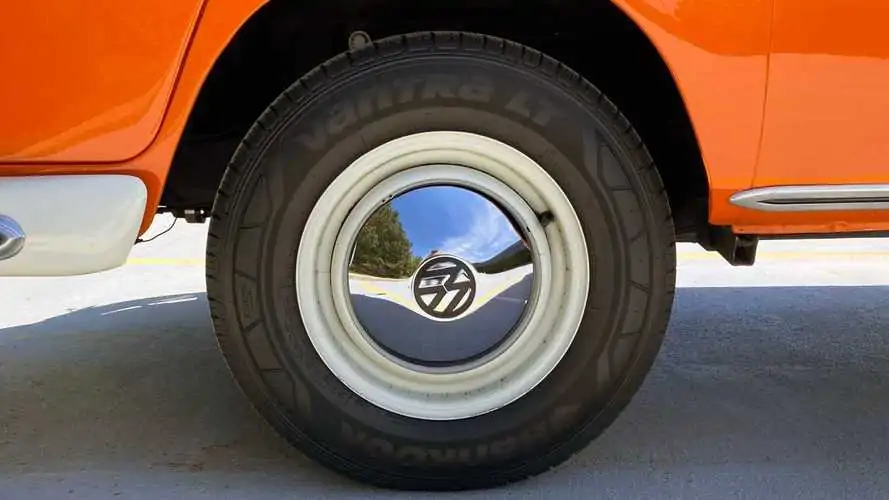
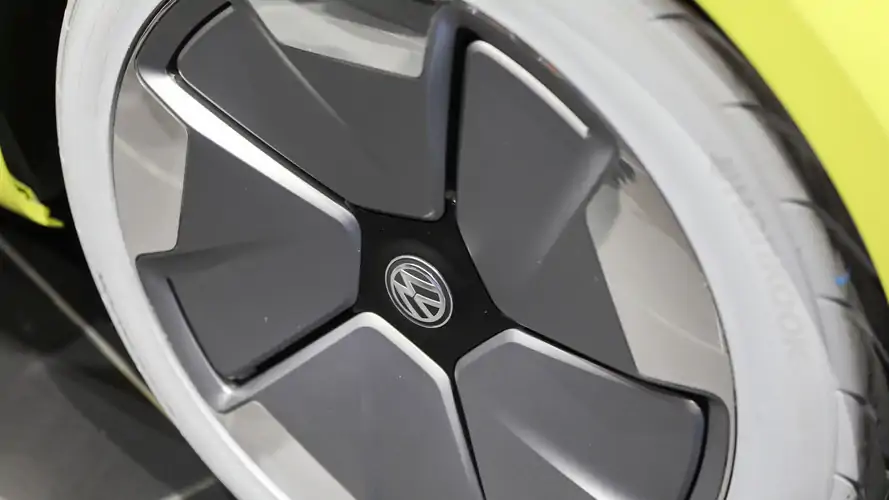
If Volkswagen gets only one thing right with the ID. Buzz, this should be it. The original Microbus has an unmistakable presence, and I saw that firsthand everywhere I went. The Creamsicle-colored Samba attracted attention constantly, proving that its appeal goes far beyond transportation. When the production ID. Buzz arrives, there will inevitably be plenty of discussion about battery capacity, driving range, charging speeds, and horsepower. Volkswagen shouldn’t let those numbers become the entire story.
The better approach is to make the ID. Buzz something people genuinely want to own and be seen in, with the electric powertrain serving as part of the package rather than its defining feature. Tesla took a similar route despite having no decades-old heritage to lean on. Its cars became lifestyle products that happened to use electric power, rather than EVs marketed solely around efficiency and technology.
Volkswagen has an even bigger advantage because it already has an icon. The ID. Buzz doesn’t need to invent an identity from scratch; it simply needs to build on the character that made the original Microbus so memorable. By the time the electric Bus arrives, Volkswagen’s growing ID lineup should already have established the company’s EV credentials. The Buzz’s job should be to bring something different to the family: personality, nostalgia, and the kind of presence that makes people stop and look.
The ID. Buzz already looks the part, but appearance alone won’t be enough. Volkswagen needs to give it a personality of its own, from the way it drives and interacts with its occupants to the kind of lifestyle that naturally comes with owning a quirky, compact van. It should feel like something genuinely different from everything else on the road. In short, the ID. Buzz needs to capture the same sense of character that made this 1967 Microbus so memorable.
For a look at the 2022 Volkswagen ID. Buzz and the other upcoming electric cars and SUVs worth watching, check out our list of future cars.