
The Ferrari Portofino name now represents two very different Italian icons: a famous coastal destination and a high-performance grand tourer from Maranello. When Ferrari introduced the Portofino in 2017, it chose the name for the successor to the California T, giving its front-engine convertible a connection to one of Italy’s most glamorous destinations. Unlike several other Ferrari models named after Italian locations, however, Portofino has no direct connection to Ferrari’s factory, headquarters, or racetrack.
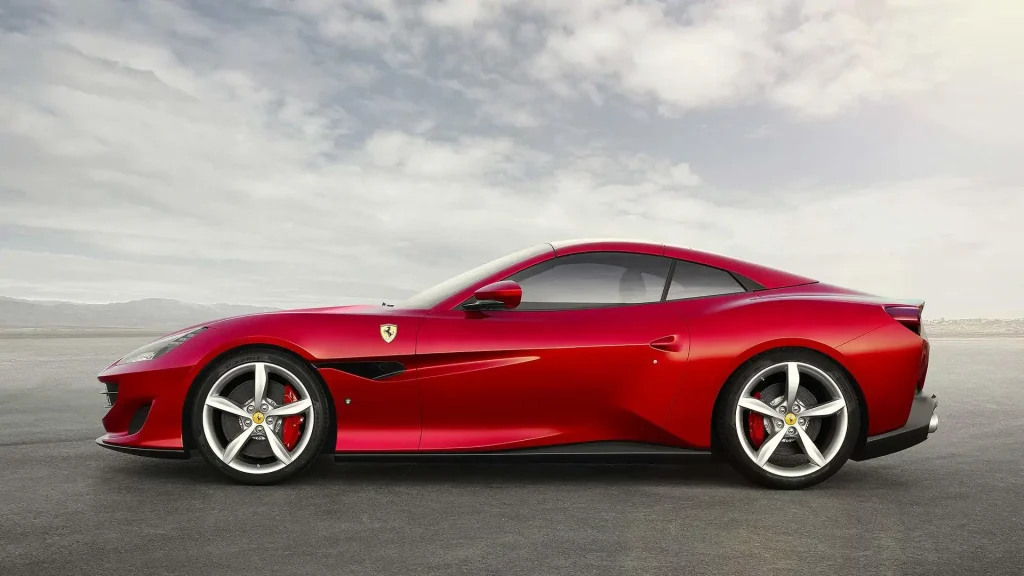
Ferrari has traditionally used Italian place names with a strong connection to its own history. The 550 Maranello and 575M Maranello referenced the town that serves as Ferrari’s home. The 360 Modena took its name from the city at the center of the region’s famous automotive culture, while the 599 GTB Fiorano was named after Ferrari’s private test circuit. In each case, the location had a direct relationship with the company.
The Portofino name took a different approach. The small village on Italy’s Ligurian coast is known for its colorful waterfront, luxury tourism, yachts, and winding roads. Those associations made it a natural fit for a Ferrari designed around high-speed grand touring rather than the uncompromising character of one of the company’s mid-engine supercars.
That distinction was important because the Portofino was designed to balance performance with usability. As the California T’s replacement, it featured a front-mounted 3.9-liter twin-turbocharged V8 producing around 591 horsepower, with power sent to the rear wheels through a seven-speed dual-clutch transmission. Ferrari quoted a 0-to-62-mph time of approximately 3.5 seconds and a top speed of more than 199 mph.
Those numbers firmly placed the Portofino in Ferrari performance territory, but the car wasn’t designed solely around lap times. Its retractable hardtop, relatively spacious cabin, useful luggage capacity, and front-engine layout made it better suited to long-distance driving than Ferrari’s more focused sports cars. With the roof down, it could deliver the open-air experience expected from an Italian convertible; with the roof raised, it became a more traditional grand tourer.
The name therefore communicated something about the car before you even looked at its specifications. Portofino suggested Italian style, coastal roads, luxury, and effortless cruising. Ferrari wasn’t simply naming the car after a place—it was using the place to establish the personality of the vehicle.
Interestingly, Ferrari wasn’t the first automaker to use Portofino as a vehicle name, but the Ferrari version gave the name considerably more recognition among enthusiasts. It also represented a departure from the company’s more traditional location-based naming strategy. Maranello, Modena, and Fiorano all tell stories about Ferrari itself, while Portofino tells a story about the experience Ferrari wanted its grand tourer to deliver.
The formula continued with the Portofino M, which brought additional performance and chassis upgrades to the model. The updated car retained the same basic front-engine, twin-turbo V8 formula but added an eight-speed dual-clutch transmission and other mechanical changes designed to make it sharper without sacrificing its grand-touring character.
Ultimately, the Ferrari Portofino name works because it fits the car’s mission. It doesn’t represent Ferrari’s factory, its racing program, or its famous test track. Instead, it evokes the kind of lifestyle the car was built for: fast roads, beautiful scenery, open-air driving, and Italian luxury.
So while the Ferrari Portofino really is named after a village on the Italian Riviera, the choice was about more than geography. Ferrari found a name that captured the character of its modern convertible grand tourer—and gave the California T’s successor an identity of its own.