
An overengineered solution to a problem that never existed.
Editor’s Note: Following publication, GMC contacted us with additional information about the Terrain’s electronic shifter, responding to both our questions and feedback from readers. The company’s comments appear below the original story.
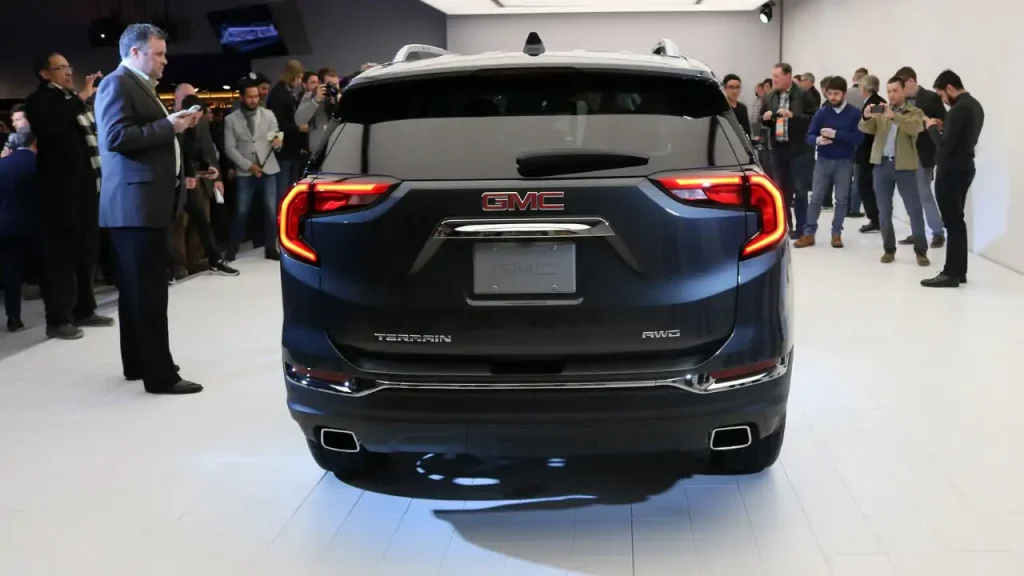
The second-generation GMC Terrain made its debut at the Detroit Auto Show, bringing a cleaner design, updated technology, and a more refined interior to the compact crossover segment. Overall, it’s a competent evolution of a model that has consistently been one of GMC’s best-selling vehicles. While its styling may not win over everyone, it checks the right boxes for the buyers it’s intended to attract.
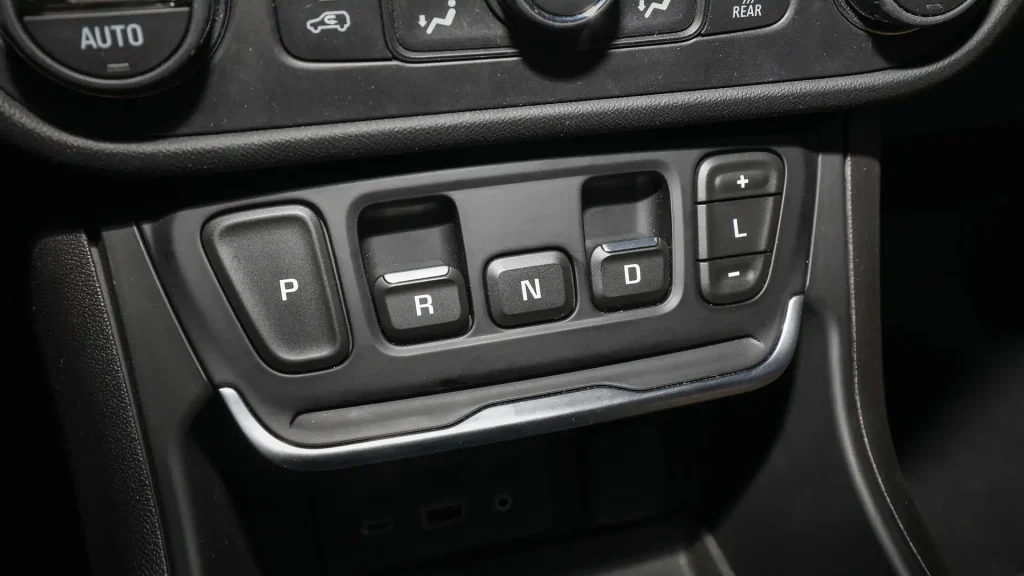
Unfortunately, one design decision overshadows much of the Terrain’s otherwise sensible execution: its push-button electronic gear selector. Replacing a conventional shifter with a row of buttons feels like an unnecessary exercise in reinventing a control that worked perfectly well for decades. Rather than improving the driving experience, it adds complexity to one of the most frequently used functions in the vehicle. It’s an overengineered solution to a problem that never existed—and one of the few genuinely disappointing aspects of an otherwise well-executed crossover.
Positioned on a dedicated panel beneath the climate controls, the Terrain’s electronic gear selector replaces the traditional shift lever with an assortment of buttons and pull switches. Park, Neutral, and Low are selected with push buttons, while Reverse and Drive require pulling small toggles that look more like leftover power window switches than transmission controls. Completing the setup are “+” and “–” buttons for manual gear selection, mounted above and below the Low button in a location that’s about as far from the driver’s natural reach as possible.
The entire arrangement feels unnecessarily complicated for a compact crossover whose owners are unlikely to spend much time manually selecting gears in the first place. Instead of making the cabin more intuitive, the system turns one of the most fundamental driving controls into an exercise in relearning something that was already simple.
GMC isn’t alone in embracing electronic gear selectors. Automakers including Fiat Chrysler and Ford—particularly through its Lincoln brand—have adopted push-button shifters as a way to free up space on and beneath the center console. By eliminating the traditional shift lever and its mechanical linkage, designers gain more flexibility for storage compartments, wireless charging pads, and a cleaner-looking interior.
In practice, however, the benefits aren’t always as compelling as they sound. I recently spent time behind the wheel of a new Lincoln MKZ, whose gear-selection buttons are mounted vertically alongside the touchscreen. The layout creates additional storage cubbies beneath the center console, but I rarely took advantage of them. In fact, I often forgot they were even there. While the extra space is a nice talking point, it didn’t meaningfully improve the driving experience, making the unconventional shifter feel like a trade-off rather than a genuine advancement.
The new design also raises practical questions. What happens if a curious child in the front seat accidentally presses one of the gear-selection buttons while the vehicle is moving? Modern vehicles include electronic safeguards to prevent unsafe shifts, but the very possibility highlights how unfamiliar this interface can feel. There’s also the issue of long-term durability. After years of daily use, will the button labels remain legible, or will they become worn and harder to identify?
More fundamentally, though, the biggest question is simple: why? The traditional gear lever has served drivers well for generations because it’s intuitive, tactile, and easy to operate without taking your eyes off the road. Replacing it with a row of buttons may create a cleaner center console, but it also adds another layer of complexity to one of the most basic interactions between driver and vehicle. Sometimes the best innovation is recognizing that a proven solution doesn’t need to be reinvented.
Table of Contents
Editor’s Note: GMC offers the following explanations for several of the concerns raised in this article.
How do you shift into Neutral if the battery is dead?
The procedure depends on the vehicle’s powertrain. On models equipped with the 1.6-liter turbo-diesel engine, Neutral can be selected by supplying the vehicle with an external 12-volt power source. For gasoline-powered models equipped with the nine-speed automatic transmission, GM provides a mechanical override lever that temporarily places the transmission in Neutral if electrical power cannot be restored. This allows the vehicle to be moved or loaded onto a tow truck even when the battery is completely discharged.
What if you accidentally press one of the gear-selection buttons while driving?
GM says the electronic shifter includes software safeguards that prevent unsafe gear changes while the vehicle is in motion. If a driver accidentally presses the Park or Reverse button at speed, the transmission will ignore the command and remain in the appropriate driving gear. The system only executes shift requests when operating conditions make them safe, helping prevent accidental gear changes that could damage the transmission or affect vehicle control.
Will the gear-selection labels wear off over time?
GM says the gear-selection button labels are engineered for long-term durability and are not expected to wear off through normal use. Rather than relying on surface-applied paint or decals, the markings are designed to withstand years of repeated contact, helping ensure they remain clear and legible throughout the vehicle’s service life.
As with other frequently touched interior controls, excessive wear is unlikely under normal driving conditions, although damage from harsh chemicals, abrasive cleaners, or physical abuse could affect their appearance over time.
How does GM prevent the vehicle from being accidentally left in gear?
GM says the electronic shifter is designed with multiple safeguards to reduce the risk of the vehicle being unintentionally left in gear. If the driver attempts to exit the vehicle while it is still in a drive gear, the system can automatically shift the transmission into Park under certain conditions, such as when the driver’s door is opened and the seat belt is unfastened. The vehicle also provides audible chimes and visual warnings to alert the driver if it detects that the transmission has not been placed in Park before exiting.
These electronic safeguards are intended to help prevent rollaway incidents and reduce the chance of driver error, while making operation of the push-button shifter as intuitive and secure as a conventional gear lever.
Conclusion
The GMC Terrain’s shifter may have been intended to give the cabin a more modern and sophisticated feel, but its unusual design proved that innovation isn’t always an improvement. A gear selector should be intuitive, easy to operate, and simple to understand—and the Terrain’s setup made something as basic as selecting a gear unnecessarily complicated. While the Terrain has plenty of strengths, its shifter stands out as a reminder that good automotive design is often about making everyday functions simpler, not more confusing.