
Why seeing a woman under the hood shouldn’t be surprising — it should be expected.
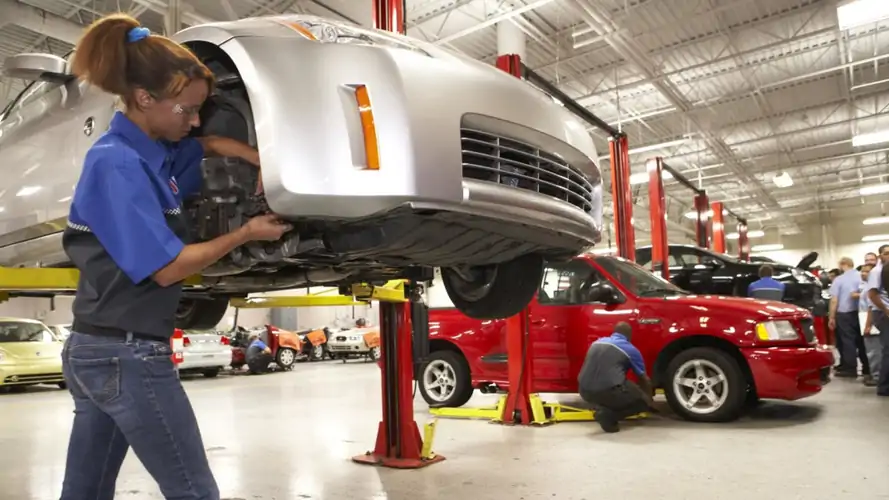
 Less than a year ago, I saw a woman working on a car at an independent repair shop. She was rotating the tires on a Volkswagen Golf R, and at the time, I remember thinking how cool it was to see. What struck me later was that I couldn’t remember the last time I’d seen a woman working professionally in an auto shop.
Talk to women who make their living turning wrenches, and they’ll readily admit they’re still a small minority in the industry. But most don’t see anything unusual about what they do. They’re mechanics because they enjoy working on cars, solving problems, and getting their hands dirty. And considering how heavily male-dominated the repair business has traditionally been, women entering the trade are slowly challenging some long-standing assumptions about who belongs in the garage.
The numbers have historically been stark. In 2016, women accounted for just 1.9 percent of automotive repair and maintenance workers in the United States, according to the U.S. Bureau of Labor Statistics. Even when related occupations such as diesel, heavy-duty, and mobile-equipment technicians are included, women still represented only a tiny fraction of the workforce.
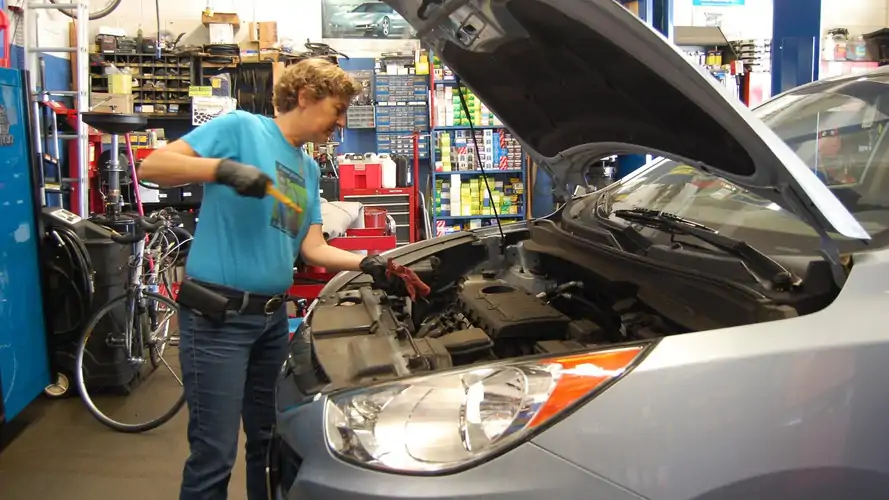
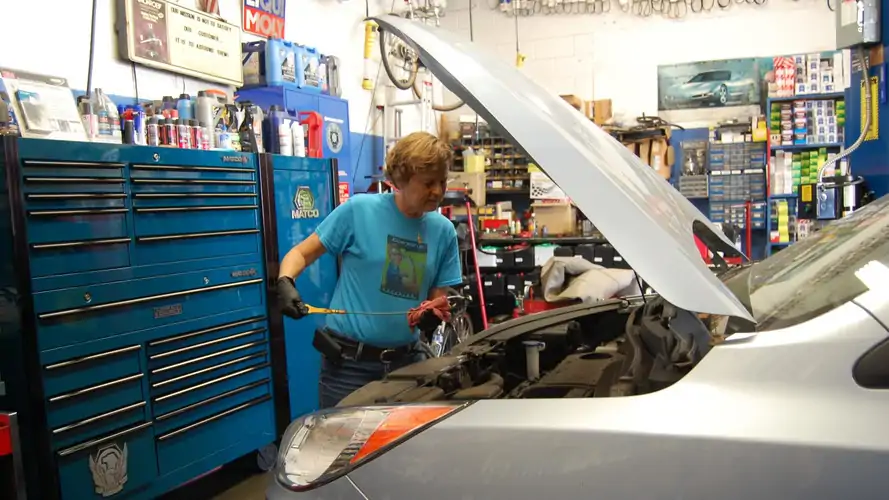
Robin Mainer, who owns Honest-1 Auto Care in Dallas, Texas, would happily add more female technicians to her shop. The problem isn’t a lack of interest from employers; it’s finding qualified women to hire.
Gender stereotypes can make entering the trade difficult. Bogi Lateiner, co-host of All Girls Garage, knows that firsthand. Since opening Bogi’s Garage in Phoenix, she’s heard plenty of variations of the same question: What is a woman doing working on cars?
Lateiner didn’t let those attitudes keep her away from the industry. Her interest began with a Volkswagen Beetle, which inspired her to enroll in auto shop during high school. She admits the experience wasn’t always comfortable. Being one of the few women in the room made her feel as though she had a target on her back. But she stuck with it and eventually restored the Beetle before graduating.
Sometimes, being underestimated becomes its own motivation.
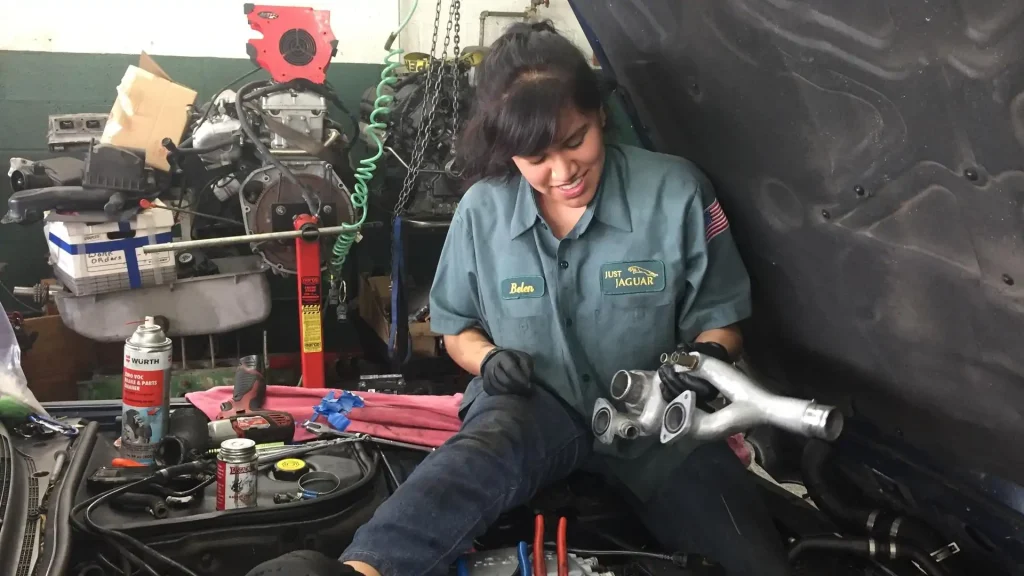
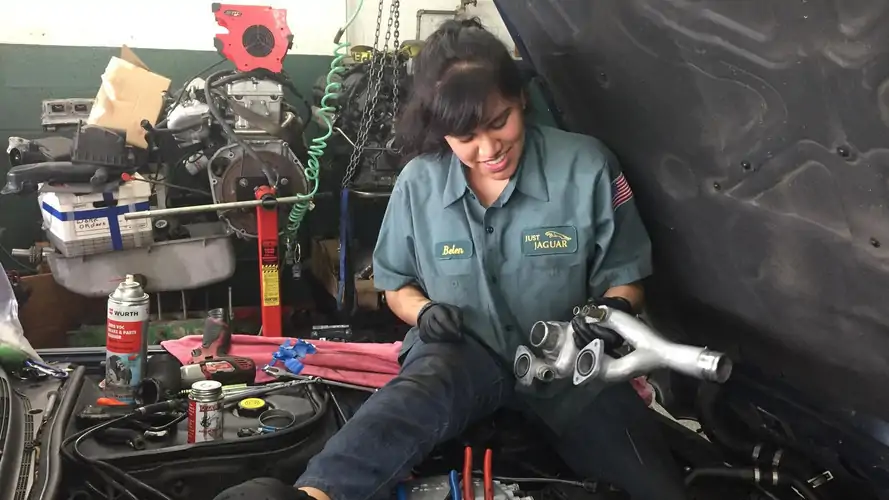
Belen Hernandez, the mechanic I saw working on the Volkswagen Golf R, has also experienced plenty of surprise from customers. She has only been working professionally as a mechanic for about a year, and she’s still getting used to the reactions she receives when people learn what she does for a living. Away from the shop, she might wear a dress, but that doesn’t make her any less comfortable around a lift, a toolbox, or a car covered in grease.
That’s part of what makes the imbalance in automotive repair so interesting. Men have increasingly entered careers traditionally associated with women, but women working in traditionally male-dominated trades still attract considerably more attention. The automotive industry is one of the clearest examples.
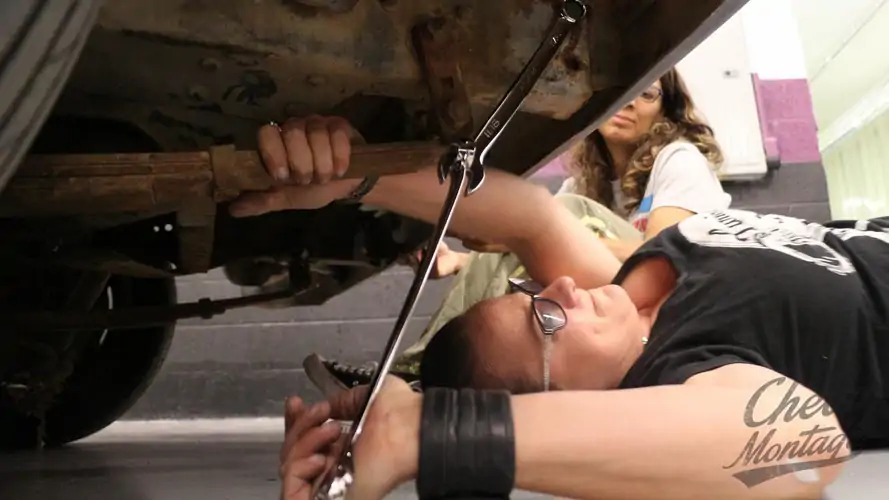
Lateiner believes that women who choose automotive repair often bring an unusual level of determination to the job. Many men can enter the trade without ever questioning whether they belong there. Women, meanwhile, may have to overcome stereotypes before they’ve even picked up their first wrench.
That extra pressure can become motivation.
“Where a lot of men fall into being a mechanic, women who are in it are here because they desperately want to be,” Lateiner says. The barriers are real, she argues, so the women who make it through tend to be especially driven and determined to prove themselves.
Visibility could be one of the biggest ways to change that. Lateiner actively shares images and videos of women working on cars because she believes young girls need to see people like themselves in the garage. If the only mechanics they ever see are men, it becomes harder to imagine automotive repair as a career option.
Social media and online communities are helping with that. Female mechanics and shop owners can now connect with one another, share advice, showcase their work, and encourage women who might otherwise never consider entering the trade.
Rebekah Fleischaker, owner of CarChick.com and a longtime Los Angeles-area mechanic, says the industry has changed considerably since she started. Online communities have made it easier for women to find support and realize they’re not alone.
Hernandez has seen that shift firsthand. When she enrolled in automotive technology training at Universal Technical Institute’s Long Beach, California, campus, she was one of only five women in her program. A little more than a year later, that number had doubled. Seeing more women enter the program gave her confidence that the industry could eventually look very different.
And being a woman doesn’t automatically mean knowing more about cars than a man. The reverse isn’t true, either. Plenty of men know very little about how cars actually work, while plenty of women can diagnose mechanical problems with impressive accuracy.
Lateiner points out that some male customers may actually find it easier to admit they don’t understand something when they’re talking to a female mechanic. There’s no shortage of men who would rather pretend they know what they’re doing than admit they don’t know a transmission from an alternator.
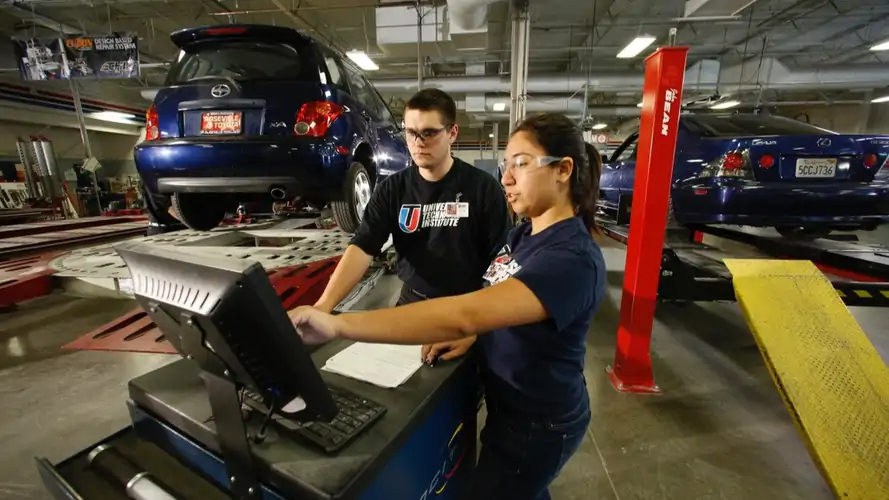
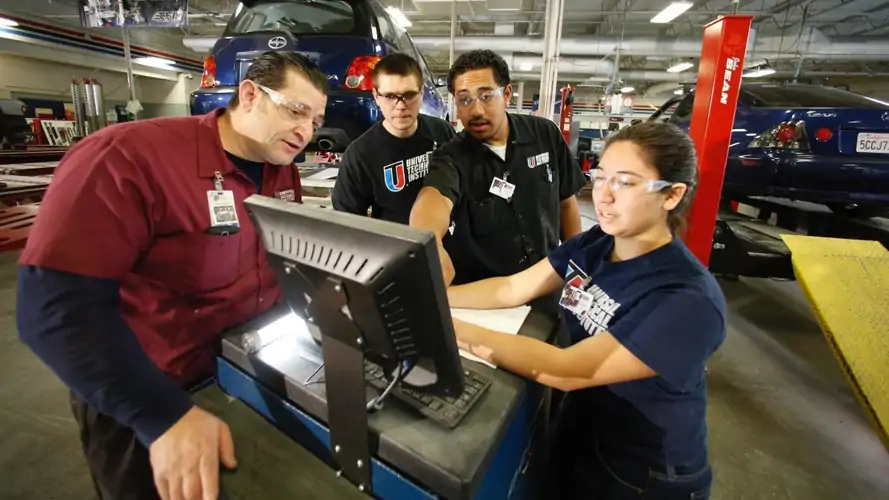
Fleischaker believes communication can be just as important as mechanical knowledge. Asking the right questions and listening carefully to a customer’s description of a problem can make a mechanic a better diagnostician, regardless of gender.
Hernandez takes a similarly careful approach to her work. Because she feels she may be scrutinized more closely than some of her male colleagues, she makes a point of checking her work carefully before returning a vehicle to its owner. If she doesn’t know something, she asks. There’s no shame in verifying an answer when someone’s car is on the line.
So why aren’t more women pursuing automotive repair careers?
The reasons are complicated. Some may have little interest in cars, while others may have never been encouraged to consider a career in the trades. And there’s no denying that walking into an overwhelmingly male industry can be intimidating.
Kimberly McWaters, CEO and chairman of Universal Technical Institute, has seen that imbalance firsthand. She began her career with UTI as a receptionist in 1984 and eventually worked her way to the top. She believes the industry needs to do more to attract women and show them that automotive technology is a legitimate career path.
Automotive repair itself is also changing. Today’s technicians aren’t simply crawling under cars covered in grease and swapping mechanical parts. Modern vehicles rely heavily on computers, sensors, sophisticated electronics, hybrid systems, and increasingly complex software. That technological shift could help change the perception of automotive repair and attract people who might not have considered the traditional mechanic’s job appealing.
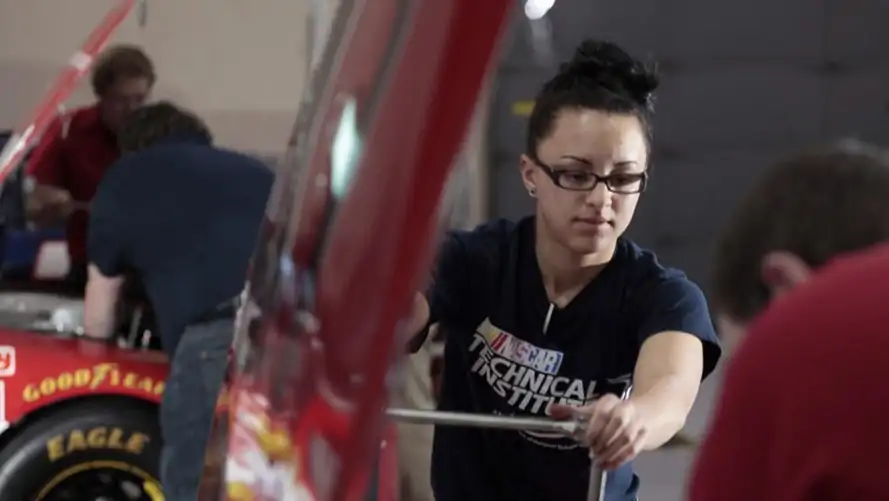
As McWaters sees it, the conversation around automotive careers is changing along with the vehicles themselves. Employers need skilled technicians, and women represent a largely untapped portion of the potential workforce.
That creates an opportunity for both sides. The industry needs more technicians, and women who enjoy technology, problem-solving, and working with their hands have a career path worth considering.
The next time you need work done on your car, don’t automatically assume the best mechanic in the shop is the guy covered in grease. The person diagnosing your engine problem, servicing your brakes, or figuring out that mysterious noise could just as easily be a woman.
And given how quickly automotive technology is evolving, the future of the repair shop may have a lot more women behind the toolbox.